
This All-Star Thriller Is Still the Most Unhinged Action Movie of All Time
There was a very specific kind of studio movie floating around the early 2000s that could only have existed during that exact moment in Hollywood history. These films had huge stars, expensive sunglasses, electronic music that sounded permanently caffeinated, and plots that felt like they were written after somebody shouted “What if this happened?” across a conference table three minutes before lunch. Swordfish belongs squarely in that era, and honestly, it might be one of the purest examples of it.
The movie came out in June 2001, slightly before the 9/11 tragedy that changed the tone of such films, and it actually underperformed in theaters, losing money initially before finding a strong afterlife on DVD. The film doesn’t creep into absurdity gradually. It arrives there immediately, kicks the door open, and starts lecturing you about Dog Day Afternoon before the opening credits have even settled down. Looking back now, what’s fascinating about Swordfish is how completely committed it is to its own chaos.
‘Swordfish’ Turned Cybercrime Into Pure Action Movie Spectacle

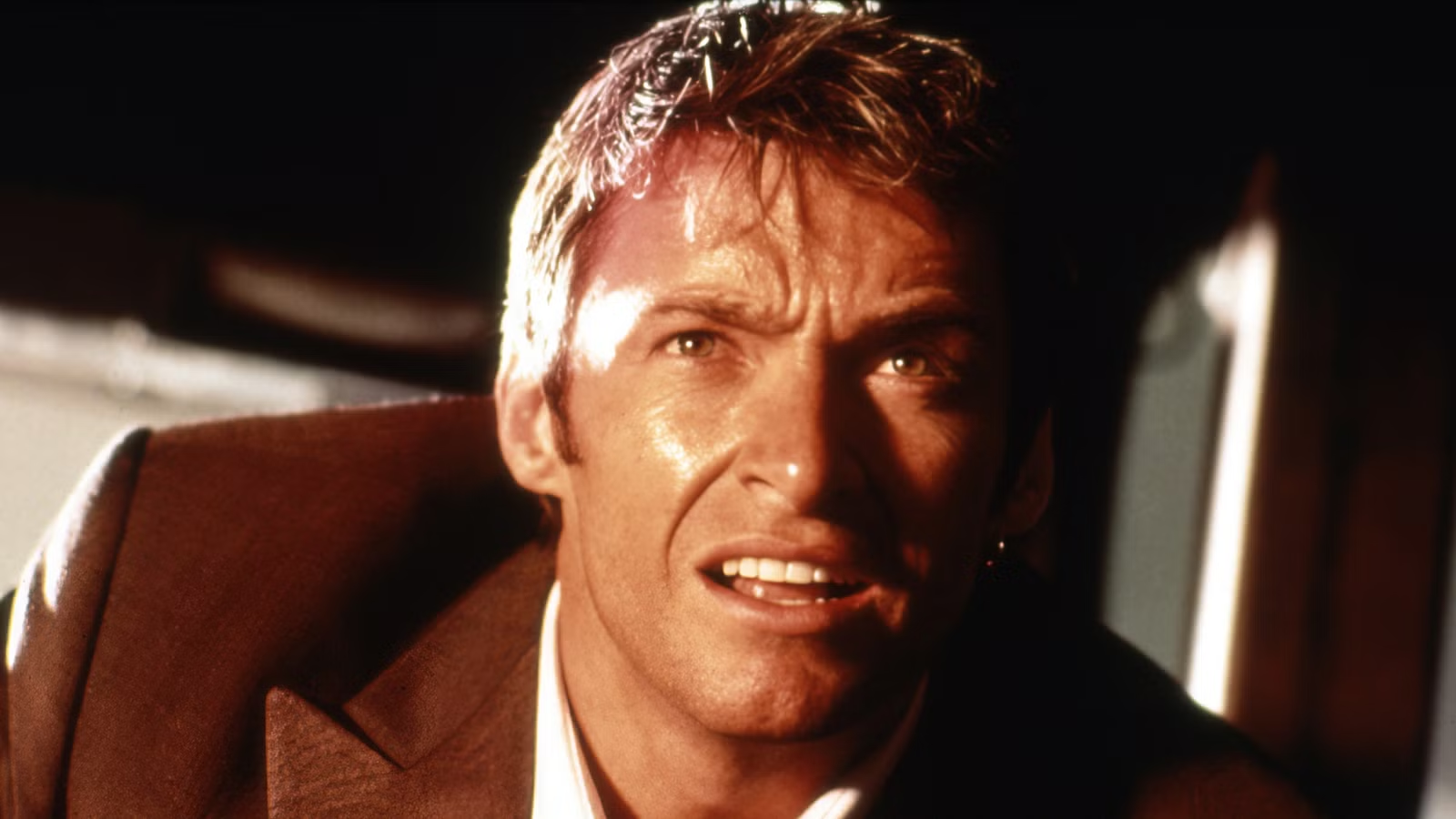
The film stars Hugh Jackman as Stanley Jobson, a hacker dragged back into criminal life by Gabriel Shear, played by a version of John Travolta who appears to have been assembled from espresso, nicotine, and unchecked confidence. Everything around them operates at maximum volume. The dialogue sounds like it was written by people who believed every sentence should either provoke, threaten, or philosophize. The action scenes make you feel that the movie itself is trying to show off.
Swordfish barely slows down long enough to tell you what the plan is before somebody starts waving a gun, delivers a lecture, or dangles another suitcase full of government secrets in front of Jackman. Stanley is a gifted hacker so dangerous that the government basically told him to step away from keyboards forever, which, according to early-2000s movie logic, obviously makes him the most valuable man alive.
Then Travolta’s criminal mastermind wades into his life dressed like a casino-owning Bond villain who read half a political science textbook and decided that qualified him to reshape the world. He pulls Stanley into a sprawling mess involving black ops money, terrorism, and enough betrayals to make everybody look mildly sleep-deprived by the third act. Meanwhile, Halle Berry’s Ginger Knowles moves through the movie with this fascinating energy where she plays every scene with equal parts seduction, accomplice, and the only person in the room who realizes these people sound completely insane.
Hugh Jackman and John Travolta Make Swordfish Impossible To Ignore
None of it is grounded in reality for even a second, which turns out to be part of the charm. Swordfish treats hacking like a full-contact sport. Stanley is not quietly typing in a basement while sipping coffee. He’s forced to crack systems under impossible pressure while distractions explode around him, both literally and otherwise. The movie takes every invisible digital process imaginable and turns it into spectacle because all subtleties were cast aside during pre-production.
Then there’s Travolta, who attacks every scene like he’s trying to out-talk the movie itself. Gabriel doesn’t simply explain his worldview; he also shows it. He unloads monologues about morality, government violence, media hypocrisy, and cinematic realism while smoking cigars and dressing like the wealthiest nightclub owner in Nevada. The incredible part is that the movie somehow survives all of this because it understands the assignment completely: to overwhelm the viewer.
That energy peaks during the famous ball-bearing explosion sequence, which still feels gloriously excessive 25 years later. The scene practically freezes time so the audience can admire the destruction from every angle possible before the chaos continues. Modern blockbusters would bury something like that under gray digital sludge. Swordfish stops the entire movie to admire its own madness for a minute, which honestly feels almost refreshing against today’s standards.
What keeps Swordfish working 25 years later is the bizarre push-and-pull between Jackman playing Stanley like a man trapped inside somebody else’s louder, crazier movie and Travolta storming through scenes with equal parts menace and ego. Travolta turns Gabriel into the kind of villain who treats terrorism like a philosophy seminar, while Jackman grounds the chaos just enough to stop the whole thing from flying completely off the rails.
And then Swordfish just keeps escalating because that’s what movies like this did back then. A bus hangs beneath a helicopter over Los Angeles, gunfights explode without warning, people reveal secret agendas every few minutes, and somebody literally learns stick shift in the middle of a chase because the movie has no patience for ordinary human limitations. That’s probably why it still works now. Not because it secretly became sophisticated, but because it never apologizes for being loud, excessive, ridiculous, and completely committed to its own chaos in a way modern thrillers usually seem too nervous to attempt.

- Release Date
-
June 8, 2001
- Runtime
-
99 minutes
- Director
-
Dominic Sena
- Writers
-
Skip Woods
- Producers
-
Joel Silver, Jonathan D. Krane, Paul Winze


