
5 Groundbreaking ’80s Sci-Fi Movies That Changed Hollywood
If you’re looking for a great science-fiction movie from the 1980s, you won’t have to spend much time searching. This decade was home to a plethora of sublime entries in this genre. This is, after all, the decade that gave the world everything from “E.T.: the Extra-Terrestrial” and the first two “Star Wars” sequels to “RoboCop,” “Akira,” and countless others. Thanks to “Star Wars” and “Alien” reaffirming the mainstream appeal and popularity of sci-fi in the late 70s, Hollywood was eager to replicate their successes in this new decade. Thus, all kinds of exciting new possibilities opened up for science-fiction cinema across all tones and aesthetics.
Unsurprisingly, given how ubiquitous this genre was in the 80s, several sci-fi movies from this decade ended up having positive, long-lasting ramifications on the entire cinema ecosystem. In particular, five films from this period have ended up forever changing Hollywood. Long after Rubik’s Cubes and purple tracksuits were shoved into the recesses of a now-dusty closet, this handful of motion pictures have kept on influencing cinematic storytelling. Their legacies have materialized very differently given which of these movies we’re talking about; all five range wildly in atmosphere and creative aspirations, so it’s no surprise they’re equally varied in artistic impacts.
However they’ve left a mark on the wider world, these five 1980s science-fiction films have very tangibly altered the filmmaking landscape. Crank up some Depeche Mode on your Walkman and let’s dive into how these five 80s sci-fi classics permanently overhauled Hollywood.
Read more: ’70s Movies That Would Never Be Made Today
Blade Runner
The futuristic world of Blade Runner (1982) – Warner Bros.
In 1982, “Blade Runner” was nothing more than a box office misfire. “Alien” director Ridley Scott, then still a relatively new voice in the cinema world, had delivered a grim noir pastiche that failed to stand out in the summer of that year, a season dominated by more appealing and feel-good fare like “Raiders of the Lost Ark,” “E.T.,” “Star Trek II: The Wrath of Khan,” and “Conan the Barbarian.” Many that summer may have thought that was the end of “Blade Runner” and that it would quickly fade into obscurity. Instead, the film endured as a massively influential project that forever overhauled how filmmakers portrayed humanity’s future on the big screen.
In the years that followed “Blade Runner,” countless sci-fi movies have imitated its neon-light drenched, run-down vision of tomorrow. “Blade Runner” has even inspired a number of video games that have taken cues from the film’s distinctive look. Subverting the classic “Jetsons” vision of the future being inherently “superior” for a more realistic worn-down incarnation of this time period clearly left a mark on people. Thus, all kinds of media have spent the last 40+ years following in “Blade Runner’s” visual footsteps. The existence of “Blade Runner 2049” has only helped spread this aesthetic to a whole new generation of dazzled audience members.
It’s undeniably true that “Blade Runner” flopped at the box office back in 1982. It’s equally true, though, that the film more than made up for it in the long haul with its staggering impact on pop culture.
The Thing
A trio of characters encountering a destroyed lab in The Thing (1982) – Universal Pictures
Among the real reasons John Carpenter’s “The Thing” flopped at the box office was that its grotesque displays of graphic violence repelled people. Film critics were especially agog at the film’s extremely brutal display of a shape-shifting alien massacring various men trapped in an Arctic research base. They weren’t even necessarily “scared” by this imagery but rather puzzled as to who could enjoy such macabre spectacle. Today, of course, the go-for-broke mayhem of “The Thing” is lauded as masterfully executed, wickedly fun to witness, and a fantastic extension of its bleak atmosphere.
Back in 1982, though, “The Thing” being viewed as some sort of morally bankrupt enterprise only exacerbated initial negativity surrounding the title’s dismal box office run. Yet over time, the John Carpenter sci-fi thriller became one of those horror movie flops that changed the genre forever. Since its release, countless further horror movies have drawn upon and emulated “The Thing’s” claustrophobic vision of horror. Meanwhile, the barrage of impressive practical visual effects techniques used for the project broke new ground for the entire visual effects field. Further breakthroughs in this domain owe a mighty debt to the grimy achievements of the film.
Even “The Thing” giving Keith David one of his earliest on-screen roles would change Hollywood forever for the better, given the avalanche of cinematic classics he’s proven integral to. Such achievements aren’t too shabby for a movie initially perceived as some kind of Satanic monstrosity.
Back to the Future
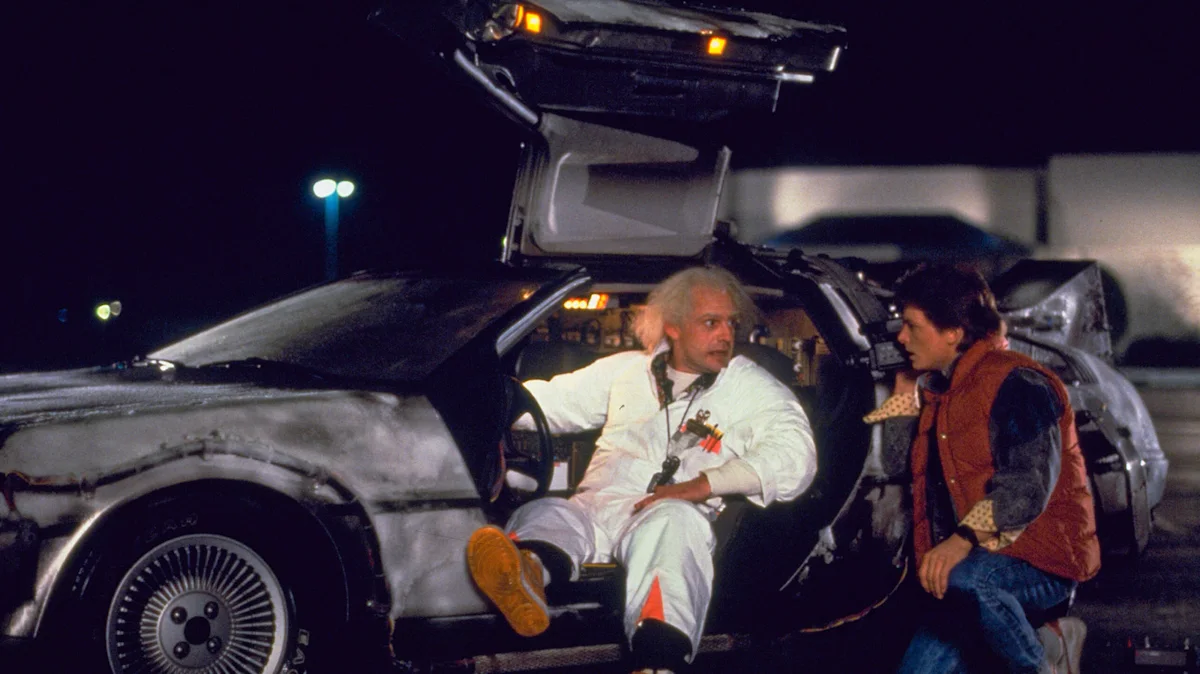
Marty McFly and Doc Brown checking the time in Back to the Future (1985) – Universal Pictures
Unlike the first two films on this list, “Back to the Future” was already killing it at the box office the moment it landed in theaters. The number one movie of 1985 domestically by a considerable margin, the start of the “Back to the Future” timeline was a massively lucrative adventure. How could it not be successful? The film is a delightful feature full of colorful performances, clever writing, and impressive visual effects work. Back in 1985, it wasn’t insane to think that “Back to the Future” would have a long shelf life after it left theaters. However, nobody involved in this project could’ve imagined just what a massive shadow the movie has since cast over all of pop culture.
Specifically, any post-1985 time travel movie, from “Avengers: Endgame” and “Time Chasers” to “Nirvana The Band The Show The Movie” has to include some kind of reference to “Back to the Future.” Marty McFly’s journey to 1955 has proved so beloved that it’s now the definitive time travel movie in pop culture. 2019’s time-travel drama “See You Yesterday” even featured McFly himself, Michael J. Fox, in a cameo as a teacher who briefly mutters “great Scott!” towards the film’s protagonist.
Cornering the market on an entire type of sci-fi story is an incredible, bordering on unbelievable, feat for a single movie. Given how popular and artistically fulfilling “Back to the Future” is, though, it’s unsurprising this 1985 gem has proven as potent as “The Power of Love” from the film’s Huey Lewis-heavy soundtrack.
Predator
The Predator standing around near a lake in Predator (1987) – 20th Century Fox
“Predator” was a mighty successful summertime movie back in 1987 with a tremendous $59.73 million domestic cumulative box office take . Given how other sci-fi films that same year like “*batteries not included,” “Innerspace,” and “Superman IV: The Quest for Peace” hadn’t lived up to expectations, the performance numbers for this showdown between Arnold Schwarzenegger and an alien beastie were especially admirable. However, where “Predator” really endured and impressed was in its lasting cultural legacy. It turns out the movie that gave the world “get to da choppah!” really left an impression on audiences of all stripes.
Specifically, the plot mold of “Predator” having a group of normal humans grapple with some otherworldly and violent force has been imitated by countless movies. 2026’s earliest weeks delivered one of the clearest examples of this pastiche in Alan Ritchson’s “War Machine.” The B-movie realm is chock full of such titles, while the theatrical film space has also delivered films like “Pitch Black” that clearly owe a mighty debt towards “Predator.” Meanwhile, retrospectives on the 1987 film have hailed its quietly subversive meta-qualities, specifically in its takedown of action movie archetypes.
Come the 90s, more and more mainstream action movies would take cues from “Predator’s” self-aware streak, including Schwarzenegger’s own 1993 film “The Last Action Hero.” Clearly, the widespread artistic impact of “Predator” goes far beyond spawning countless sequels, like 2025’s “Predator: Badlands,” which changed the franchise forever. Indeed, the original 1987 “Predator” also created new niche’s for sci-fi action films to inhabit.
Tron
Kevin Flynn stuck in The Grid in Tron (1982) – Walt Disney Pictures
Thanks to an assortment of huge 21st century flops Disney wants you to forget about, “Tron” is now nowhere near the biggest box office misfire in the history of the Mouse House. In fact, “Tron” nearly doubled its $17 million budget in its $33 million domestic cumulative box office take, which was enough to make it 1982’s 22nd biggest movie domestically. Still, Disney wanted way more out of this audacious project financially. To boot, the feature got a mixed reception. While some praised its groundbreaking visual effects, others couldn’t get over how sleepy and emotionally distant the project was. That wasn’t exactly the glowing acclaim that greeted 1977’s “Star Wars.”
Today, “Tron’s” story is considered as incomprehensible as ever. However, more than 40 years after its debut, it’s clear this film and its historic use of computer-animation wizardry were momentously important in the history of Hollywood. Countless filmmakers, including the earliest artistic heavyweights at Pixar Animation Studios, saw “Tron” and realized a new world of possibilities had opened up. An entire generation of artists and countless further breakthroughs in visual effects techniques wouldn’t have been possible without “Tron” blazing a trail into the future.
“Tron” even helped establish a precedent for motion pictures confronting and exploring cyberspace, a cornerstone of most movies today. As a piece of standalone art, this early ’80s live-action Disney film isn’t exactly brimming with energy or dramatic urgency. However, in a historical context, it’s unquestionably one of the most impactful sci-fi movies ever made.
If you enjoyed this article, sign up to our free newsletter for the biggest movie and TV news delivered straight to your inbox. You can also add us as a preferred search source on Google.
Read the original article on Looper.


