
Bollywood can no longer breathe without sequels. Franchises are its new oxygen : Bollywood News
Bollywood keeps talking about risk, originality and the need to back fresh voices. Its slate is saying the exact opposite. The industry’s current pipeline looks less like a creative marketplace and more like an IP stock exchange, where the safest bet is not the best story but the most familiar title. The evidence is now too loud to ignore.
Bollywood can no longer breathe without sequels. Franchises are its new oxygen
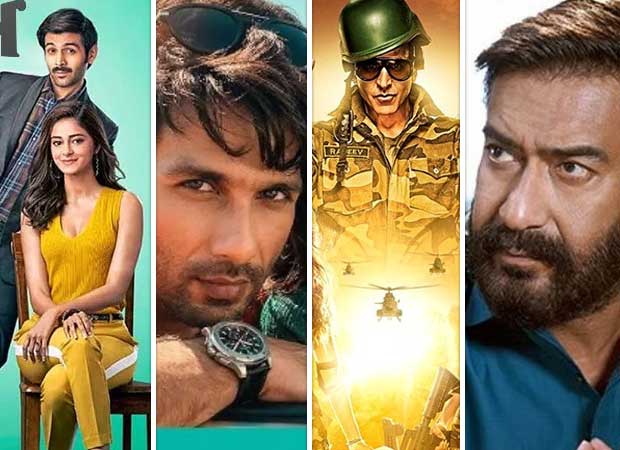
The 2026 release calendar itself reads like an industry confession. Pati Patni Aur Woh Do is slated for May 15, Cocktail 2 arrives on June 19, Welcome To The Jungle on June 26, Dhamaal 4 on July 3, Bhediya 2 on August 14, Khosla Ka Ghosla 2 on August 28, and Drishyam 3 on October 2. That is not just a sequel-friendly line-up. That is an ecosystem leaning heavily on known titles, legacy recall and inherited audience memory. Bollywood is no longer merely making franchises as part of its business. It is increasingly organising its business around franchises.
That is the real story of the current theatrical era. Sequels are no longer an occasional strategy. They are becoming the operating system. And once an industry starts depending on old titles to generate new confidence, it has to confront an uncomfortable question: is this franchise boom a sign of strength, or proof that original mainstream ideas are no longer trusted at scale? The trade logic behind it is obvious. A sequel comes with pre-sold recall, built-in curiosity, easier marketing hooks and a head start in the opening weekend race. In a theatrical market where one weak Friday can destroy months of planning, familiarity is now being treated as insurance.
One seasoned trade analyst put it brutally: “Everyone says they want original content. Then the first question in the room is, ‘Is there a franchise hook?’ That tells you everything.” That one line captures the mood in the industry better than any official statement can. Bollywood may still use the language of creativity in interviews and roundtables, but in greenlight rooms the language is increasingly about minimising fear. The sequel is not just a film. It is comfort.
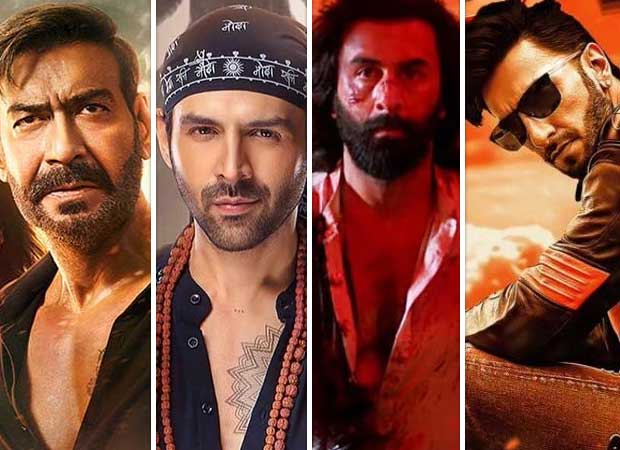
Look at the pattern over the last two to three years. In 2024, Singham Again and Bhool Bhulaiyaa 3 helped reinforce the industry’s obsession with known brands. In 2025, titles like Housefull 5 and Jolly LLB 3 kept the franchise machine active. And now 2026 is pushing the trend even harder, with a stacked calendar full of follow-ups, revivals and second, third or fourth chapters. Meanwhile, the pipeline under production and in active development continues to favour continuing universes. Animal Park is positioned as a major continuation. Don 3 has enough brand power to stay relevant despite delays and casting chatter. This is no longer a wave. It is a system.
And that is where the alarm bell rings. Because when franchises begin to dominate both the current release calendar and the development pipeline, originality does not disappear overnight. It gets pushed to the margins. Original scripts still get written, and some still get made, but they are increasingly denied the kind of scale, theatrical confidence and pre-release oxygen that franchise films receive automatically. A sequel gets premium release dates, higher awareness, simpler trailer communication and a much easier pitch to exhibitors and brand partners. An original film has to justify itself from scratch while competing against titles that are effectively born with audience memory already attached. That is not an even contest. It is a structural tilt.
As one trade insider said, “A sequel can survive a weaker trailer because memory does half the marketing. An original film has to be sold like a new religion in 30 seconds.” That is the brutal commercial truth. Recognition has become a substitute for conviction. If the title already carries some emotional equity, the industry breathes easier. If it is a fresh world, the questions get harsher, the betting gets more cautious and the support becomes more conditional.
The defence from the industry is predictable. Audiences choose franchises, so producers are only responding to demand. That argument is partly true and deeply incomplete. Audiences often choose from what is aggressively marketed, widely distributed and positioned as an event. If a franchise film enters the market with stronger awareness, wider showcasing and bigger opening-weekend machinery, of course it begins with an advantage. The more important point is that Bollywood is now behaving as though brands can compensate for the lack of conviction in new ideas. That is a dangerous long-term trade philosophy. Once studios begin valuing familiarity above novelty, the industry may still make money, but it starts losing imagination.
What makes the current moment even more striking is that the sequel hit ratio has not been flawless enough to justify blind faith. Not every sequel becomes a phenomenon. Not every old brand guarantees a new blockbuster. Some follow-ups underperform, some collapse, and some merely remind the audience that a title alone cannot generate emotion. Yet the industry continues to double down. That is what makes this trend look less like confidence and more like dependence. Bollywood is not leaning on sequels because they always work. It is leaning on sequels because they make decision-makers feel safer.
A hard-hitting exhibitor-level voice summed it up bluntly: “Bollywood isn’t addicted to sequels because sequels always work. Bollywood is addicted to sequels because they reduce fear inside boardrooms.” That is perhaps the clearest diagnosis of all. The franchise boom is not just about audience demand. It is about internal nervousness. It is about an industry that no longer trusts itself enough to mount original large-scale bets with the same aggression it once did.
In trade terms, Bollywood is increasingly treating intellectual property like a defensive mutual fund. Producers are choosing lower-perceived volatility over higher creative upside. A known title reduces the burden of explanation. It allows marketing teams to sell recognition before they sell content. It allows stars to attach themselves to already validated worlds. It gives distributors a cleaner story to take to exhibitors. But there is a hidden cost to this comfort. Once sequel culture hardens, the audience also becomes more demanding. Every next part must feel like an upgrade. The result is budget inflation, expectation inflation and eventually fatigue. Franchises buy you an easier opening, but they can also trap you in an endless escalation cycle.
On the whole, the danger is no longer subtle. Bollywood is not merely enjoying a franchise phase; it is becoming structurally dependent on it. The release calendar says so. The pipeline under production says so. The development chatter says so. The boardroom psychology says so. And when an industry starts treating sequels as oxygen, it must admit the darker truth hiding underneath: it is no longer breathing easily on the strength of new ideas alone. That may keep the box office machine running in the short term. But if the dependence deepens, Bollywood may soon find itself with more brands than breakthroughs, more continuations than convictions, and more noise than novelty.
More Pages: Cocktail 2 Box Office Collection
BOLLYWOOD NEWS – LIVE UPDATES
Catch us for latest Bollywood News, New Bollywood Movies update, Box office collection, New Movies Release , Bollywood News Hindi, Entertainment News, Bollywood Live News Today & Upcoming Movies 2026 and stay updated with latest hindi movies only on Bollywood Hungama.


