
10 Horror Movie Flops That Are Actually Misunderstood Masterpieces
Not all well-made horror films are appreciated upon their release. In many cases, the movie in question suffers from being overlooked, and audiences later find it on home video or streaming before elevating it to its rightful place. While that’s not how the filmmakers would have preferred their creation to be received, it’s better than the other scenario, where the film outright bombs and critics label it a disaster that needs to be burned before more eyes are exposed to it.
The following horror films suffered from some variation of the two; each either met with a range of criticisms implying they were misfires, better to be forgotten quickly, or unfairly ignored by audiences. Some tasked viewers with sitting in moments too uncomfortable to stand, while others were bafflingly picked apart by critics who were clearly having a bad day. Time heals all wounds and sometimes makes bad films great, because these horror movie flops went from reviled to revered once the right audience embraced their creativity and originality.
‘The House That Jack Built’ (2018)

There are directors who court controversy with provocative films, and then there are six levels ahead of that where Lars von Trier has his mail sent. Known for a body of work with challenging entries like the Willem Dafoe-led Antichrist and the two-part Nymphomaniac films, von Trier gave audiences a close-up look at psychopathy in The House That Jack Built. Starring Matt Dillon as the titular Jack, the film follows the peculiar killer in his journey of cold-blooded murder and blind luck in avoiding being caught.
During the Cannes screening of The House That Jack Built, audience members famously walked out when faced with Jack’s callous and shocking acts of depravity. It’s an understandable reaction to the film, because The House That Jack Built pulls no punches in its simulation of cruelty, and because the film doesn’t rely on the campiness that a slasher would, the violence feels altogether too real to ever call enjoyable. That uncomfortable feeling is the point, though, because movies frequently allow the viewer a reason to excuse the violence as entertainment, a concept The House That Jack Built refuses to take part in.
‘Annihilation’ (2018)

When a meteor creates an ever-expanding biological threat known as the Shimmer, a group of scientists and experts steps into the occurrence to understand its effects. Joining the expedition is Cellular biology professor Lena (Natalie Portman), a woman with a personal interest in the Shimmer since her husband Kane (Oscar Isaac) returned as the sole survivor from the previous attempt to enter the mysterious zone.
Annihilation was met with positive reviews from critics, but the movie failed to draw in audiences with an ambiguous premise that was hard to market easily. Time will be kind to the science fiction horror film because not only does it have visceral scenes of horror, such as a moment with a mutant bear that many point to as a high point, but it also strives to say so much more. Using a literal journey into the unexplained, Annihilation explores the sometimes toxic, self-destructive nature of even the most rational person, who operates against their self-interests.
‘Grindhouse’ (2007)

The pairing of Quentin Tarantino and Robert Rodriguez recreating a retro movie-watching experience seemed like a no-brainer hit, but that wasn’t the result of Grindhouse. A throwback to the low-budget era of ’70s exploitation films, Grindhouse saw Tarantino and Rodriguez each direct a feature, connected with an intermission featuring fake trailers for movies that lovingly parodied the time period. While Tarantino offered up the vehicular-focused Death Proof, Rodriguez submitted the splatterfest mutant horror hybrid Planet Terror.
Perhaps it was too much to ask for a modern audience to sit through a three-hour concept piece, or the subject matter was too niche, but Grindhouse as a complete package didn’t sell tickets. Split apart, the results of Grindhouse look completely different. Each film found its audience, and the fake trailers were widely praised for their tongue-in-cheek tone. When taking into account three of the fake trailers, Machete, Hobo with a Shotgun, and Thanksgiving, later became movies, it’s evident that everyone involved was on the right track, even if the initial viewing experience wasn’t enticing.
‘Bone Tomahawk’ (2015)

In the Western horror mashup Bone Tomahawk, a group of men rides into certain danger after a cannibalistic tribe invades their quiet settlement. Kurt Russell stars as the Sheriff who leads the inadvisable rescue mission to bring back two of their kidnapped townspeople. Unprepared for the brutality that awaits them, the men move forward despite multiple setbacks toward an encounter that will test their mettle to survive.
A limited theatrical release guaranteed Bone Tomahawk would not come close to making back its budget, but positive word of mouth elevated the film’s reputation. Deservedly so, because writer and director S. Craig Zahler constructed a unique movie that is equally funny, thrilling, and, in a scene everyone talks about, gory. Don’t let the notoriety of the scene in question dissuade a possible watch, because at its core, Bone Tomahawk is a masterful Western and horror movie that is a must-watch.
‘Possession’ (1981)

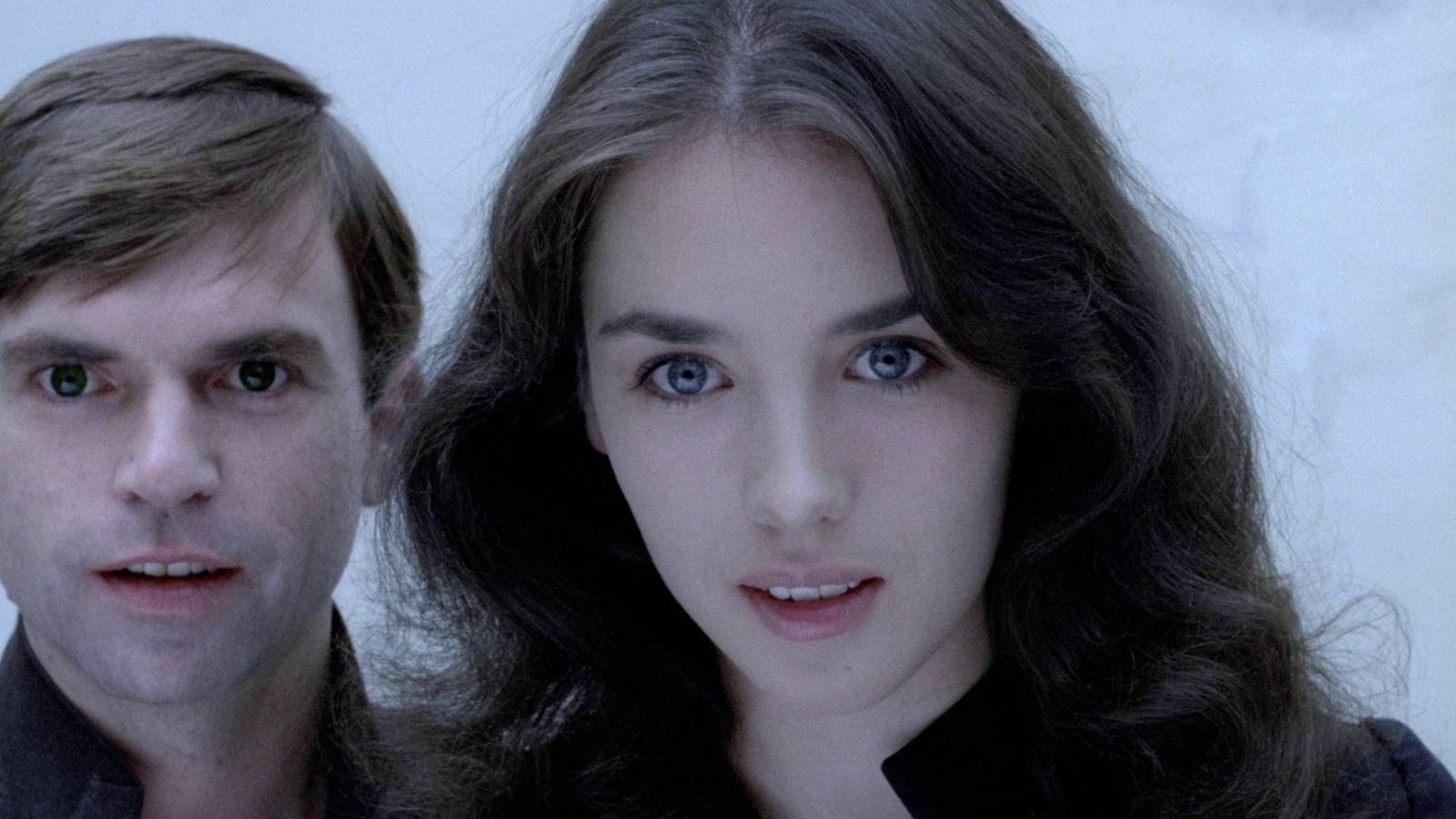
The pain and betrayal of a divorce sit at the heart of the unforgettable psychological horror film Possession. Sam Neill and Isabelle Adjani star as a married couple, Mark and Anna, who descend into a spiral of destruction when Anna asks for a divorce. Possession chronicles the typical stages of a separation, which include lies, extramarital lovers, dead bodies, and tentacle monsters.
A challenging film not designed for the weak of stomach, Possession didn’t have a long life in theaters before earning the horror merit badge of being banned as one of the “video nasties.” As shocking as Possession was for audiences in the early ’80s, the movie would now qualify as elevated horror and is largely treated as such. Neill and Adjani give astounding performances as the doomed couple, and allow Possession to be a drama about the toxic transformation love can sometimes dip into, while still being an effective horror movie.
‘In the Mouth of Madness’ (1995)

Keeping in the spirit of underperforming Sam Neill movies, he was front and center for one of director John Carpenter’s most underrated films, In the Mouth of Madness. This time around, Neill is the confident and professional insurance investigator John Trent, who is assigned the high-profile task of locating missing horror author Sutter Cane. Trent thinks he’s found a lead that will take him to the author, but what he finds instead is the knowledge that everything he believes in could be from the imagination of a stranger.
In the Mouth of Madness was met with middling ticket sales and lukewarm critical assessment, ultimately being perceived as a flop when it premiered in 1995. However, audiences, and not just fans of Carpenter, have begun to discover and praise the film, turning it into a bit of a cult classic. It’s meta dissection of media and horrific dreamlike sequences, which were once dismissed as cheap jump scares, have largely held up, making In the Mouth of Madness a gem in an otherwise slim selection of quality ’90s horror movies.
‘Cronos’ (1992)

The quest for eternal life comes with a sinister price in the independent horror feature Cronos. When an aging antique dealer, Jesus (Federico Luppi), discovers a strange, hidden device that bonds to him, he welcomes a youthful revival in both his spirit and body. As Jesus is stricken with a growing thirst for blood and threatened by a rival who wants the device for himself, Jesus will soon wish to rid himself of the cursed object.
Guillermo del Toro is indisputably one of the most accomplished horror directors working today, but his career didn’t immediately take off. Despite overwhelmingly positive reviews that leave the film in the high ’80s on Rotten Tomatoes, Cronos failed to recoup its $2 million budget, proving to be a brief stumble in the start of del Toro’s career. Eventually, audiences caught up to what critics already knew, and Cronos became a cult classic now recognized for its brilliance.
‘Peeping Tom’ (1960)

Modern audiences might not be aware of it, but the roots of the slasher sub-genre can be found in the 1960 thriller Peeping Tom. Film-obsessed Mark Lewis (Carl Boehm) wishes to be a famed director, but the movies he makes for his entertainment require the death of unsuspecting victims. While Mark continues to work on his epic masterpiece of death, a budding romance with a friendly woman causes the killer to develop feelings that complicate his life and pull his focus.
Peeping Tom and Psycho came out the same year, and while Psycho became a massive hit, Peeping Tom largely ruined director Michael Powell’s career. By modern standards, Peeping Tom is a tame movie exploring the power dynamic of voyeurism and sadism, but the film was controversial and offensive to UK moviegoers and critics. Years later, Peeping Tom has been reevaluated as a brilliant piece of filmmaking, largely influential and ahead of its time.
‘Freaks’ (1932)
There are horror films that lose their effectiveness over the years, unable to pack the proper shock to audiences desensitized to gore, but Freaks remains as horrific now as it was when it premiered in 1932. A traveling circus is the backdrop for a grim morality tale about the beautiful trapeze artist Cleopatra (Olga Baclanova), who seduces a freak show performer named Hans (Harry Earles) into marrying her to take his money. When Cleopatra’s deception is discovered, Hans’ freak show family settles matters in a memorable and grotesque way.
The use of actual sideshow performers brought a sense of realism to the story that made audiences uncomfortable on a level they weren’t aware they could reach, and Freaks notoriously bombed in theaters. Adding insult to injury, Freaks was banned in multiple countries, only finding a second life through midnight screenings that weren’t unlike the exploitive sideshows themselves. Director Todd Browning’s career would never recover, and he would die before seeing the film become embraced as a defining piece of early horror.
‘The Thing’ (1982)

John Carpenter is arguably the greatest horror director of all time, the man behind multiple masterpieces, and yet he ends up on this list twice. One of his greatest public failures would later turn into one of his most celebrated works in the form of his science fiction horror film The Thing. The story of a group of Arctic researchers doing battle with an alien creature who can mimic their appearance is so beloved that there’s possibly a generation who don’t realize how catastrophic a failure it was.
Carpenter was the mastermind behind the genre-influencing Halloween only years prior, and expectations were high for his future films. So when The Thing opened to poor ticket sales and critical bludgeoning that eviscerated the future classic, Carpenter was fired from his next project, adapting the Stephen King novel Firestarter. Critics eventually softened their takes and changed their opinions about the unquestionably fantastic movie, but that doesn’t undo the damage caused by a perplexing take on the timeless film.


