
5 Times Hollywood Learned the Wrong Lessons From Huge Movies
Although cinema is also an art form, Hollywood operates as a high-stakes corporate enterprise, constantly analyzing market trends to reproduce whatever formula generates the highest profit margins. Just like any other industry driven by quarterly earnings, major studios meticulously study blockbuster triumphs to find ways to cut costs and maximize gains, with very few Hollywood executives even concerned about cinema in itself. So, when a specific movie shatters box office records, executives immediately scramble to replicate those financial results. However, in the rush to bank quick cash, Hollywood often learns the wrong lessons, failing to understand what made them successful in the first place.
This persistent corporate misunderstanding of cinema has repeatedly plunged Hollywood into exhausting, derivative trends. By prioritizing rapid imitation over organic storytelling, the industry actively ignores the specific context that allowed foundational films to become classics, often mistaking the specific artistic merit of a production for a formula to be applied somewhere.
5) The Toy-Movie Rush After Barbie

Barbie became a genuine cultural phenomenon, earning over $1.4 billion worldwide, because filmmaker Greta Gerwig transformed a famously divisive doll into a self-referential feminist satire. On top of that, the movie was packed with immaculate production design and two note-perfect lead performances from Margot Robbie and Ryan Gosling. Barbie even earned eight Oscar nominations, including Best Picture, and proved that a singular directorial vision could elevate even the most unlikely intellectual property into a critical and commercial juggernaut. Hollywood executives, ever eager to find a simple formula, drew the predictably shallow conclusion that toy lines were a shortcut to cinematic success. The result has been a frantic gold rush of IP acquisitions and greenlights, with studios betting heavily that the Barbie model can be replicated simply by putting a familiar childhood brand on a poster.
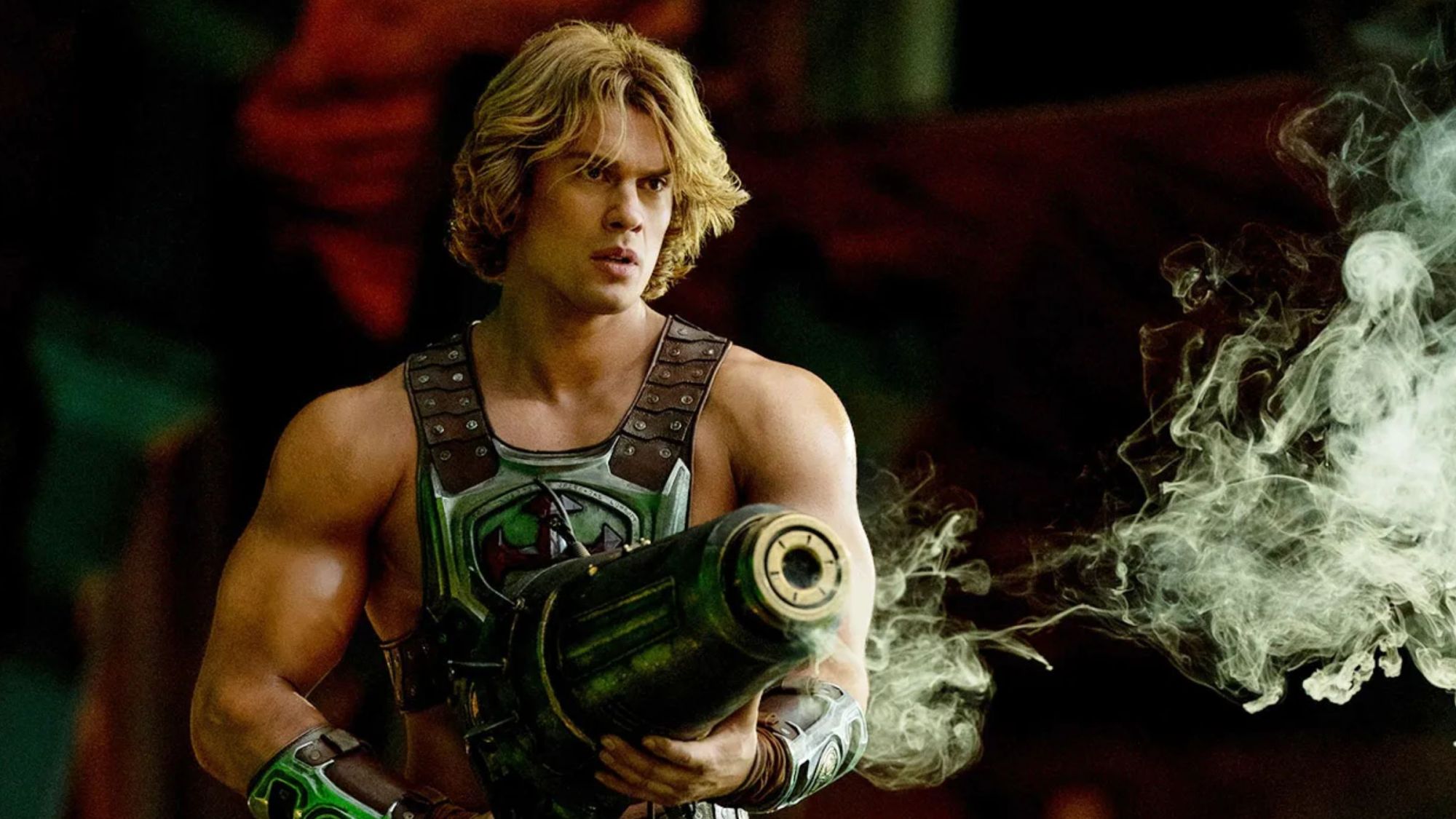
Released just last week, Masters of the Universe became the first high-profile casualty of this thinking. Amazon MGM Studios poured a massive $170 million into the live-action fantasy epic, hoping the Mattel brand recognition and a toned Nicholas Galitzine as Prince Adam would summon Barbie-level returns. Instead, the film opened to a dismal $54 million globally, which tells us it won’t recoup its costs. Meanwhile, the pipeline of toy adaptations remains absurdly packed, as a Hot Wheels movie, a Polly Pocket comedy, a Barney film, and even projects based on UNO, Matchbox, and Rock ‘Em Sock ‘Em Robots are all in various stages of development. The lesson Barbie actually offered is that sharp writing and a distinct directorial vision can turn plastic into gold. That has been entirely ignored in favor of a blind scramble to make more toy movies.
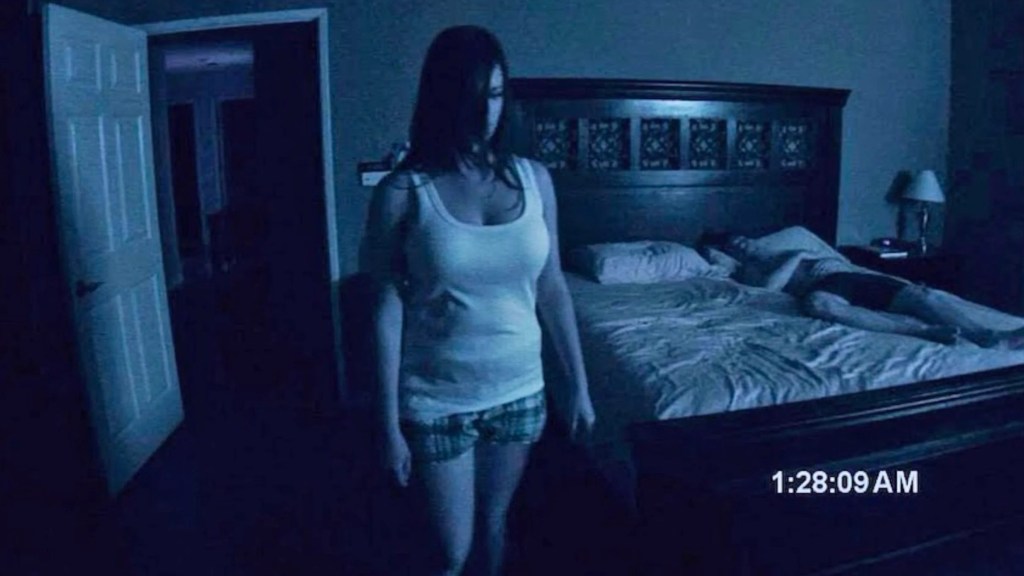
Oren Perli shot Paranormal Activity in his own house over a week for just $15,000, using a static camera and two actors to create dread through small, believable details. Until then, found footage was a niche horror device, but Perli proved you could craft a terrifying story with virtually no money, counting only on the power of silence and suggestion to build fear. His bet paid off, as after a savvy marketing campaign let audiences vote online for screenings, Paramount expanded the film nationwide. In a few weeks, Paranormal Activity had hauled nearly $200 million worldwide against Perli’s microscopic budget, making it the most profitable film in Hollywood history. Of course, Hollywood executives became desperate to find the next movie that would earn them millions with little to no investment.
By completely ignoring the meticulous pacing that made Paranormal Activity terrifying, studios rushed to release an avalanche of found-footage clones. This oversaturated market prioritized chaotic camera movements over genuine suspense, yielding outright disasters like The Devil Inside, Apollo 18, The Gallows, The Pyramid, and Chernobyl Diaries. Some of these movies managed to find box office success, but all were seen as a cheap attempt to profit, straining fans’ patience. The gimmick eventually bled out of the horror genre entirely, infecting teen comedies like Project X and disaster films like Into the Storm. Executives even applied the format to science fiction, resulting in the superhero origin story Chronicle and the alien adventure Earth to Echo. Eventually, the relentless stream of increasingly unwatchable features like As Above, So Below and the endless Paranormal Activity sequels exhausted the audience, transforming a highly effective narrative device into a universally despised financial exploit.
3) The Gritty and Realistic Curse of The Dark Knight
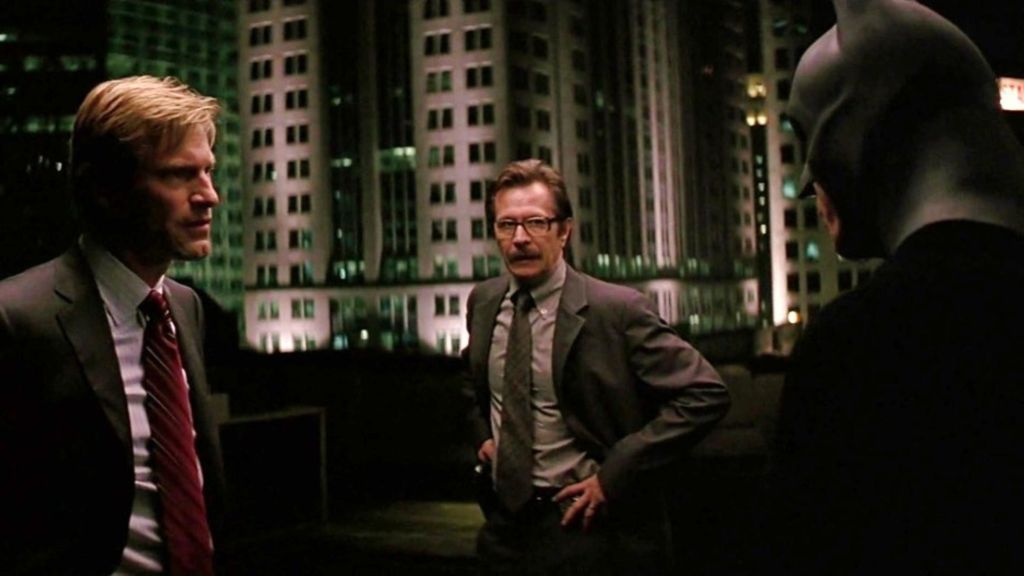
Christopher Nolan’s The Dark Knight shattered box office expectations, especially after Batman Begins had underperformed. With a brooding tone, moral complexity, and Heath Ledger’s Oscar-winning Joker, The Dark Knight grossed over a billion dollars and earned serious critical respect, which was far from the rule when it came to superhero adaptations in the 2000s. Naturally, Hollywood executives had a disastrous takeaway, deciding that a “dark and realistic” take on a beloved icon equaled prestige, and property—no matter how inherently colorful—needed to be dipped in grim.
What followed was a joyless purge that lasted over a decade. For instance, The Teenage Mutant Ninja Turtles, beloved pizza-eating goofballs, were reimagined as hulking monsters in Michael Bay’s 2014 reboot. Josh Trank’s Fantastic Four also drained Marvel’s First Family of their usual cosmic wonder entirely. Even Power Rangers drowned its candy-colored premise in angst and muted concrete tones, pleasing neither kids nor nostalgic adults. The most expensive misstep was the DC Extended Universe, where Zack Snyder’s Man of Steel presented Superman as a neck-snapping loner, a deconstruction that curdled into Batman v Superman’s infamous “Martha” scene and a string of self-serious, color-drained films that became more divisive as movies went by.
2) The 3D Fad After Avatar
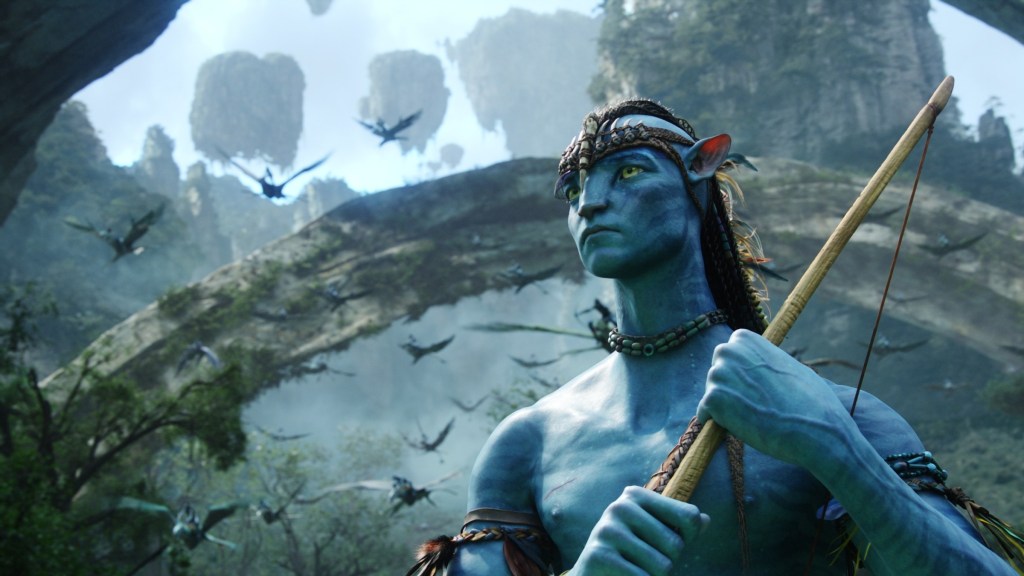
While 3D had been used in cinema before Avatar, James Cameron treated the technology as a fundamental part of worldbuilding, crafting Pandora as a meticulously detailed sci-fi world that seemed real in theaters. Unsurprisingly, the unique visual experiment paid off, with Avatar soon becoming the highest-grossing movie of all time, a record it still holds. Hollywood executives, eager to reproduce the Avatar success, suddenly decided that offering a movie in 3D was a sure route to success. Since filming in native 3D is expensive, the solution was to convert regular 2D movies to offer them in a special format, a disastrous post-production trend that plagued the early 2010s.
One of the worst offenders was Clash of the Titans, which arrived just months after Avatar’s reign began. Shot entirely in 2D, the movie was slapped with a post-production 3D conversion in a matter of weeks, resulting in headache-inducing visuals. The 3D was so bad that Clash of the Titans director Louis Leterrier publicly disowned the conversion. Disney followed with Alice in Wonderland, a Tim Burton film shot in 2D, then converted and marketed as a “must-see in 3D.” The Green Hornet took the prize for audacity, as director Michel Gondry admitted he’d framed shots specifically not for 3D, yet the studio forced a conversion anyway. For a few years, 3D became the norm, even though in most of the cases it only added eye strain and an almost mandatory $3–$5 ticket premium. As a result, the trend almost permanently destroyed the public’s trust in 3D cinema.
1) The Cinematic Universe Consequence of The Avengers
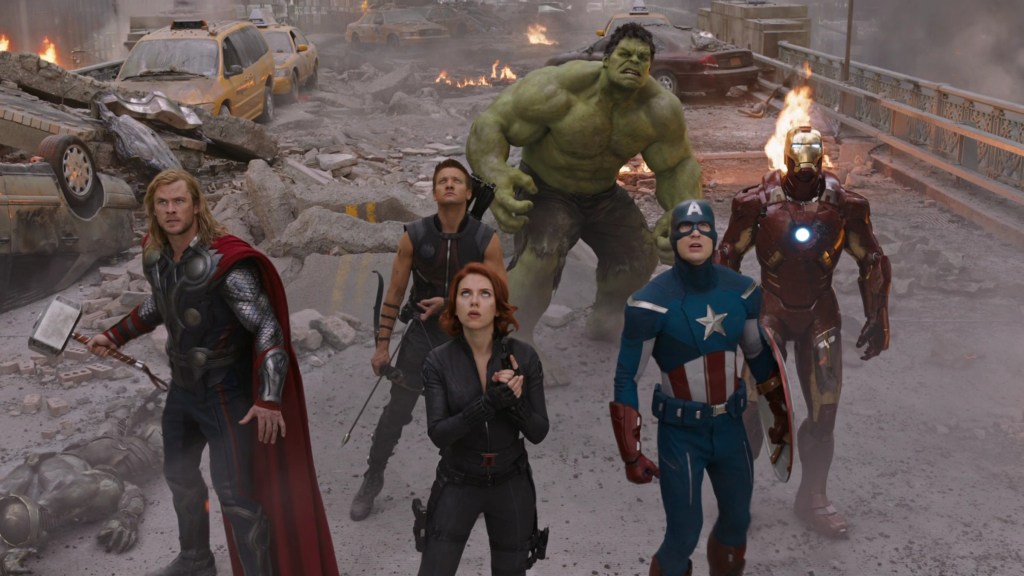
Marvel’s The Avengers represented the payoff of a genuinely audacious Hollywood experiment. Over four years, Marvel Studios methodically built toward a crossover by first establishing Iron Man (Robert Downey Jr.), Thor (Chris Hemsworth), Captain America (Chris Evans), and the Hulk (Mark Ruffalo) in their own distinct adventures, cultivating audience investment in characters before assembling. The result was a cultural juggernaut that grossed over $1.5 billion and redefined what a blockbuster franchise could be. Of course, the takeaway from Marvel’s triumph was disastrous, as a shared cinematic universe became the new box-office cheat code.
To compete with Marvel, Warner Bros. fast-tracked the DC Extended Universe, pushing Batman v Superman: Dawn of Justice into theaters with a rushed blueprint that crammed franchise-building into one film, a strategy that hobbled Justice League before it even began. Universal famously announced its Dark Universe with a glossy cast photo, only to watch The Mummy crumble into a critical and commercial embarrassment that killed the entire enterprise on arrival. Sony, holding Spider-Man’s rogues’ gallery, launched a villain-centric universe with Venom, then doubled down with Morbius, Madame Web, and Kraven the Hunter, producing a string of mocked misfires that became punchlines. Even Paramount attempted to launch a Transformers writers’ room that would include other franchises such as GI Joe and MASK. Crossovers feel special when they are earned through patient storytelling, a lesson that even Marvel Studios has struggled with in recent times.
Which disastrous Hollywood trend do you think caused the most damage to cinema? Leave a comment below and join the conversation now in the ComicBook Forum!

