
6 Adventure Movies That Are Impossible To Hate
Adventure movies are designed to be fun, crowd-pleasing events. They, as much as any genre, want to be entertaining first and foremost, and largely ignore the greater moral or ethical questions suggested by their narratives in favor of pure escapism. That relativity makes it easy for some people to criticize films within the genre, particularly those that, whether intentionally or not, propagate racial or gender-based stereotypes.
There are many incredibly well-made films that fall prey to those particular pitfalls, whether through a generational level of ignorance or too strict adherence to a genre often messily entangled with colonial or patriarchal attitudes. There are a select few, though, that are so effectively made, and outrageously entertaining, that they are almost impossible to hate. These are those six movies.
‘Raiders of the Lost Ark’ (1981)

Steven Spielberg and George Lucas’ big-budget homage to the adventure serials of their youth helped reshape the modern blockbuster landscape. Alongside Star Wars, Raiders of the Lost Ark legitimized a type of movie once considered cheap and empty entertainment. Not only were both films massive successes, but they also found critical acclaim and were given golden showers of Oscar nominations. The Academy Awards may be a questionable barometer of quality, but the recognition of Lucas and Spielberg speaks to the overwhelming impact of their respective films. Raiders of the Lost Ark is the best, and most expensive, kind of cheap entertainment.
As the iconic Indiana Jones, Harrison Ford is star power defined, which makes the character impossible to hate. Now, there are legitimate issues with him, such as his status as a supposed white savior plundering the historical artifacts of other countries or the suspect timeline of his and Marion Ravenwood’s relationship. One twinkle in Ford’s eye and you’ll immediately forget all of that, if you even noticed in the first place or were just caught up in Spielberg’s masterclass in technical filmmaking. Raiders of the Lost Ark moves like a Nazi truck hauling the Ark of the Covenant, and has set pieces that individually belong in a museum. It’s the first modern adventure movie, and all others live in its shadow.
‘Back to the Future’ (1985)
Without the success of Raiders after Spielberg bombed with 1941, it’s entirely possible we might not have gotten Back to the Future. Robert Zemeckis and Bob Gale were proteges of Spielberg, and while their first three collaborations, which included 1941, were financial failures, it was Spielberg’s power that helped their time travel teen comedy get made. Coming off the hit of the Raiders-lite adventure Romancing the Stone, Zemeckis had a chance to make the film everyone in town had already rejected. He had his pick of studios, but instead he went back to Spielberg, who had previously championed the project.
Back to the Future is less problematic than Raiders in that it is slightly more satirical in its attitude toward its ’50s setting than Spielberg’s film is about the ’30s. While it fully engages in a warm kind of nostalgia for the era, it also acknowledges the blatant racism, sexism and prevalence of sexual violence. Somehow, those darker elements barely chafe against the film’s otherwise light and fun tone. It’s one of the minor miracles of the many minor miracles that surround the film and its success. From some of the original script draft ideas to an alternate actor in the lead role, Back to the Future continually avoided disaster and corrected the timeline to the one where it is universally beloved.
‘The Princess Bride’ (1987)

Other than the fact that the only notable female characters in The Princess Bride are a helpless damsel in distress and a nagging wife, the film is relatively unproblematic. All of this criticism isn’t to be pedantic about films that are considered canonical classics; it’s to point out that perfection is imperfect and how they all magically manage to render their individual issues ineffective. The Princess Bride is as impossible to hate as its dialogue is impossible not to quote. The late Rob Reiner’s collaboration with screenwriter William Goldman, who adapted his own novel, is a perfect example of distilling the essence of a source material into its most entertaining elements.
As a meta-fantasy narrative, The Princess Bride is presented as a love story read by a grandfather to his grandson. The tale of Westley, played with perfect charm and physical comedy by Cary Elwes, and his attempts to save the love of his life, Princess Buttercup (Robin Wright, who gives her all to a role that gives her less than half back), is filled with all the requisite humor, swordplay, and adventure one expects. It’s all played so devilishly off the cuff yet completely genuine that it has a comforting quality to it. Reiner, ever the immaculate storyteller, knows that the love story doesn’t end with Westley and Buttercup’s kiss, but with a grandfather telling his grandson he loves him.
‘The Mummy’ (1999)

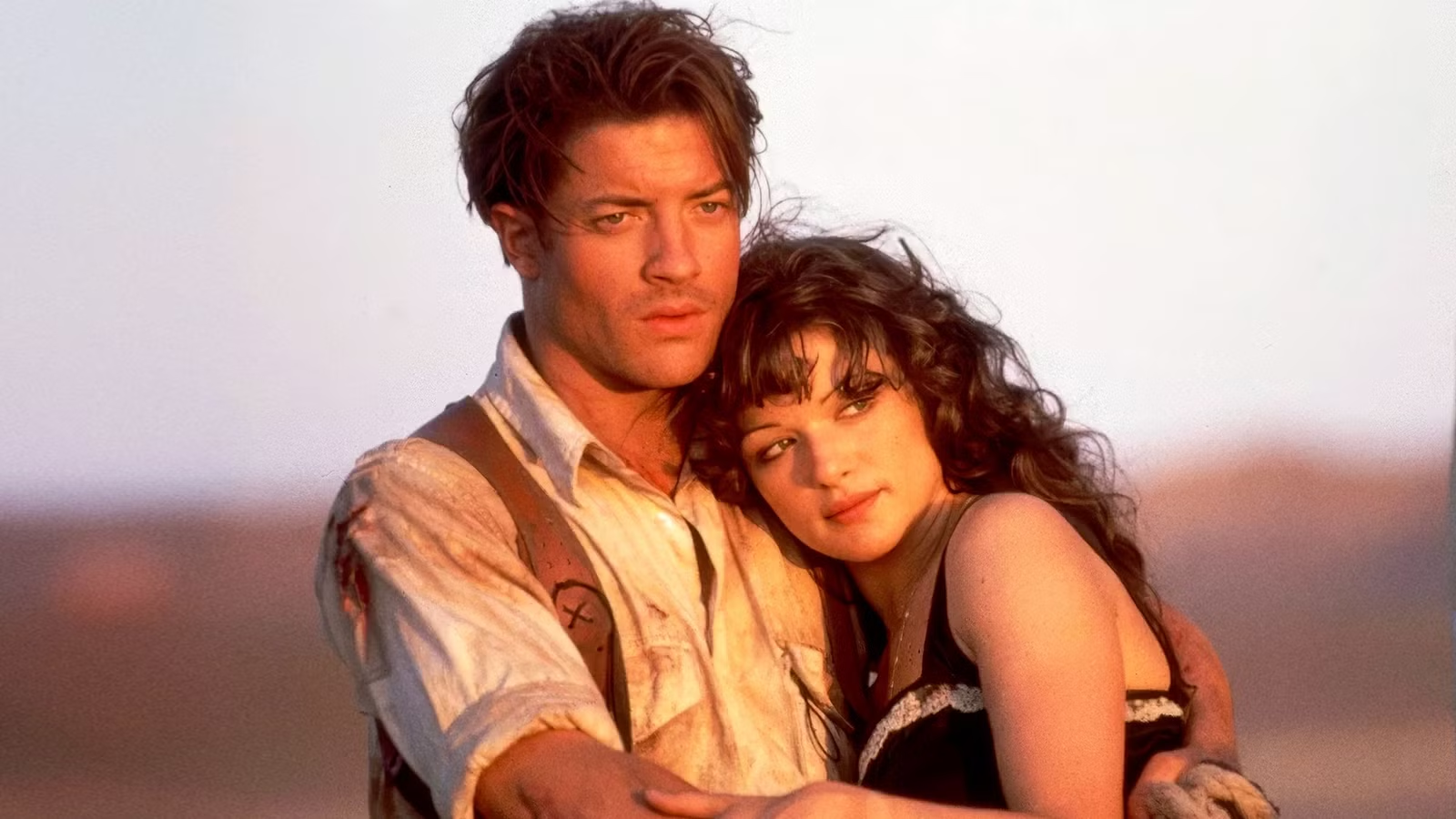
As much as Raiders of the Lost Ark, Back to the Future, and The Princess Bride elevate the adventure genre and expand its capacity, The Mummy completely, and delightfully, regresses it. There is nothing perfect in its composition, nothing brilliant about its narrative structure, or anything endlessly quotable in its dialogue or genuinely empathetic in its characters. It is the quintessential B movie made with an A-level budget more than anything else. Stephen Sommers is as clear an example of what a modern B-movie director looks like after filmmakers like Spielberg turned the genre into tentpole studio films.
Find anything intellectual, satirical, or subversive in The Mummy, and you’ll have dug deeper than the filmmakers did, but that is a feature of the film and not a flesh-eating scarab bug. This movie is going to entertain you in big bold lit-up letters with several exclamation points put at the end. It’s going to entertain you with the scalding chemistry of Brendan Fraser and Rachel Weisz, the broad British charm of John Hannah, and the indefinable sex appeal of Arnold Vosloo. Also, consummate character actor Kevin J. O’Connor gets to play the wormy secondary antagonist slash comedic relief. If you hate The Mummy, you might be more hollow than Imhotep after having his organs removed.
‘How to Train Your Dragon’ (2010)

DreamWorks’ surprisingly mature, surprisingly emotional, surprisingly breathtaking and just downright surprising animated film How to Train Your Dragon seemed so outwardly to be generic family fare. The early teasers and trailers advertised a movie with some magical elements made to feel reminiscent of the then-titanic Harry Potter franchise, while the depiction of the dragons looked like every cloying Disney cute animal characteristic distilled into one adorable mythical beast. The film, much like the equally surprising Kung Fu Panda, ended up being a fantastic balance of character, comedy, action and an emotionally affecting plot.
The bond between Hiccup, the non-conforming Viking son of the village chieftain, and the mislabeled Night Fury dragon Toothless, is one of unconditional acceptance. The queer-coding of the film is deliberate, but perhaps subtle enough that the anti-woke critics didn’t cry foul of it, or maybe the movie just came out early enough to avoid that culture war. Either way, How to Train Your Dragon is genuinely moving whether you believe it speaks to a specific lived experience or broader universal themes of developing individuality and building empathy. It’s one of DreamWorks Animation’s enduring masterpieces, and it speaks to the progressive evolution of the adventure genre.
‘Paddington 2’ (2017)

Who could hate this delightful, marmalade-loving bear? He’s a national treasure in Britain, and his live-action film franchise brought the Peruvian Ursus to international fame. Projecting warmth with simple stories told well with heart and empathy, the films collectively offer a softly coded immigration narrative, while Paddington 2 is the gentlest film about the power of human empathy for criminal reformation ever made. The Paddington movies are secretly brilliant and hating them might just be a bear-based hate crime.
In the second installment, which is inarguably the best film of the franchise, Paddington is framed and wrongfully imprisoned for a crime he didn’t commit. While in the big house, he transforms it and its inmates with the power of his positivity and kindness. It may not be a bold statement to say being kind is important, but seeing how many of the current political powers have forgotten this fundamental tenet of human decency, it bears repeating. Paddington 2 can make you a better person, so long as you just take it to heart.

