
10 Great World-Building Action Spectaculars You Need to See
Tom Jolliffe presents a selection of ten great movies (or franchises) with distinct world-building that make them unique…
Action has been one of the most popular genres in cinema since a horse was first saddled and ridden at speed on screen. From cowboys to ninjas, spies to car thieves, the action genre continues to excite audiences. You can have an action movie set in something akin to grounded reality, such as Die Hard, which pits everyman cop John McClane against international thieves in a skyscraper. Or the world of Jason Bourne, which, though filled with clandestine meetings, feels like it could well be set within a reality close to our own – especially with the gritty direction of Paul Greengrass in particular.
However, plenty of action movies have brilliant world-building, set in a universe that whilst recognisable is more like hyperreality. It may be a present-day that’s alternative to our reality, where perhaps physics and convention don’t work the same way. Or it might be a film set in a future, whether it feels like a possibility in reality or not. Audiences either buy the world-building or they don’t, but when done right, a distinct film universe adds a little bit of special sauce to your standard good vs evil battle, or whatever MacGuffin chase our hero finds themselves in. Here are ten great films (or franchises) with brilliant world-building…
James Bond
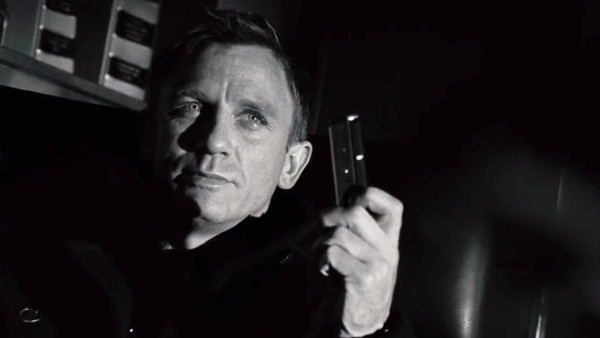
One franchise has kept going for over 60 years, continuing to adapt the source material and evolve it into fresh stories. James Bond does world-building in his own inimitable way. From Connery, through to Daniel Craig (and no doubt beyond), there are consistent elements which are integral to Bond. That’s secret villain organisations with far-reaching grips, inexhaustible finances and fortresses. Then there’s Bond himself, who will plow his way through at least two love interests per film, be armed at all times and perfectly tailored. No matter his mission, too, there always seems to be a banquet, or a casino, or sprawling upper-crust soirée that requires him to be dressed up.
The great thing about Bond is how the core elements have adapted and melded to each new approach and actor, from the cheesy gadget-heavy theatrics of Roger Moore, to the more grim and serious Craig era. Even Craig has benefitted from specially kitted-out sports cars too. His opening gambit, Casino Royale, may well rank as one of the best (if not the best) Bond films. It quickly set the tone for a more fallible, moody and grounded Bond and yet ensured that the spectacle still adhered to the levels expected from audiences watching Bond. Martin Campbell, just as he did for Pierce Brosnan’s Goldeneye, set a high opening bar and came out of the blocks quickly. Casino Royale’s opening act is exceptional, highlighted by the brilliant footchase that still manages to drop your jaw.
Mad Max
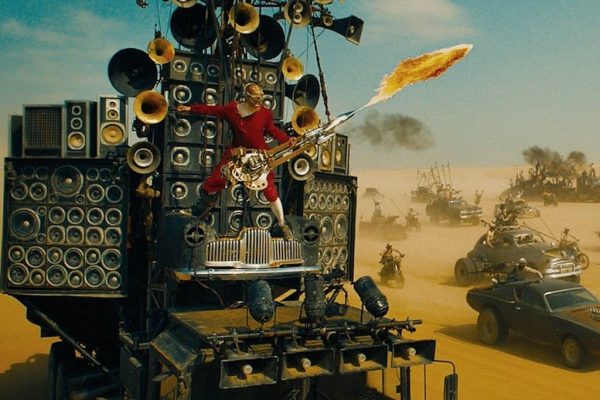
Mad Max as a franchise managed to craft a unique world, based in a dystopian future of dusty landscapes and roaming marauders scavenging for gasoline, water, and resources, and everyone still reliant on their petrol vehicles. The first one was a little more grindhouse, still set within some last semblance of recognisable civilization. By the second film, The Road Warrior, the lore was pushed further, with Max distinctly ambiguous and the world more beaten down and ravaged.
George Miller, from the opening film to the most recent, Furiosa: A Mad Max Saga, has built the world of Max (and Furiosa) on vehicular chaos. Fans could well argue has gone deeper into the world-building in his most recent film, although it felt the heftiest of the lot, lacking the lithe, punchy thrills and the stoic presence of Max. For most franchise fans the movie that perfectly nails its world and consistent thrills would be a toss-up between Fury Road and Road Warrior. For me it’s the latter though, coming at a perfectly tight 90 minutes, filled with wild characters and iconic images and with Mel Gibson pitch-perfect as a quiet, brooding, and haunted hero. Tom Hardy never quite nailed the remit (and thus it’s no surprise Miller segued into a follow-up focused on Furiosa).
Charlie’s Angels
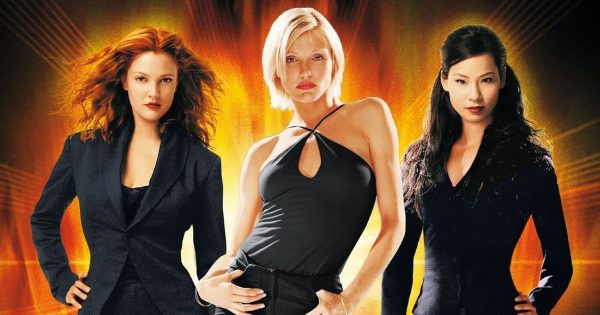
McG, remember him? Whilst his take on the Terminator was greeted with mostly indifference, his adaptation of the corny original series, Charlie’s Angels, paid more heed to his own whims than to satisfying fans of the original Angels series. His Angels world was bright, dazzling, infectious and colourful. His heroic trio of fighting femmes (played to perfection by Cameron Diaz, Drew Barrymore and Lucy Liu) were prone to involuntary dance routines, or physics-defying kung-fu bouts. These Angels must have had wings given their ability to glide through the air.
The first film of his duo was the best, if only because it was restrained (well… compared to the sequel). Still, the way Charlie’s operation runs feels way beyond reality, with every mission allowing space for excessively dangerous pursuits, costume changes galore, and the chance to make innumerable movie references. Aided by Bill Murray in great form (or Bernie Mac riffing with glee in the sequel), there’s plenty to entertain in these light, breezy, and outrageous films. It was something sorely lacking in the more recent, disastrous reboot from Elizabeth Banks that lacked fun and a cast with any chemistry.
The Matrix
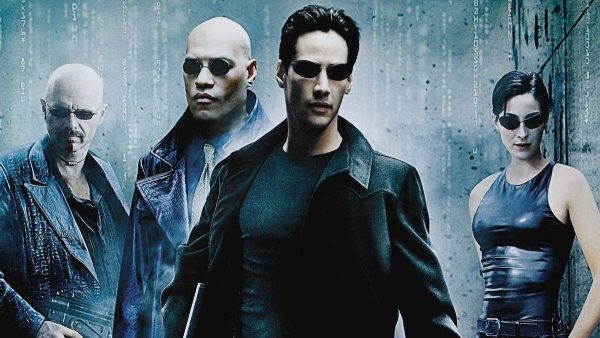
The Wachowskis did some serious world and lore building with their Sci-fi action opus, The Matrix. The first film became a pop culture and countercultural phenomenon. The first film alone unfurls a long tapestry of lore, built upon odes to Manga, The Terminator, kung fu cinema, and more. All whilst being sprinkled with philosophy, religious and mythological references. The sequels built on the Wachowskis’ universe almost exponentially, albeit losing narrative focus at times and trying to go one or two steps beyond necessary with the set pieces. Still, when you’ve “created” bullet time as your special move in the first film, it needs to be something even more spectacular to be revolutionary. As it transpired by the Burly Brawl in Reloaded and beyond, nothing had quite the same “whoa” factor.
The first film still stands as a sensational way to end the century, an iconic and groundbreaking action-sci-fi masterpiece. No sequel has come close, though the most recent, Resurrections, almost did a solid job of subverting the franchise, only to about-turn and boringly adhere to it.
Mission: Impossible
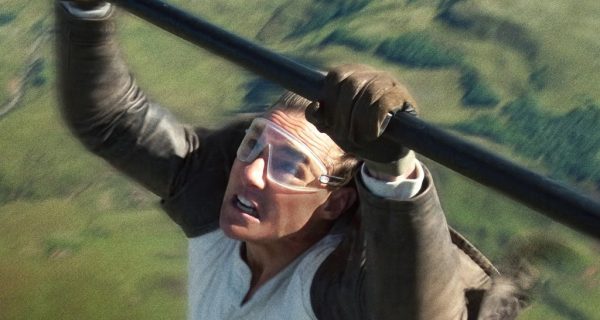
The Mission: Impossible franchise began in earnest with a Brian De Palma-helmed style fest that, like most of his work, was built on homage. It tipped a cap to the original series, but also threw itself back to 60s spy thrillers and a pinch or two of Hitchcock (you’d expect no less from De Palma). It still ranks as the franchise’s most assuredly and fittingly directed film. It also began a calling card that would personify the entire franchise. Ethan Hunt’s hunt for a MacGuffin. Every film in the franchise has them, from those which are more clearly defined, to something like the ‘rabbit’s foot’ (in the third part) that is kept pretty vague.
Does it matter that every film follows the same race between Hunt and his antagonists to get the MacGuffin first? The network of spies, agencies and rogue agents has given the franchise its own shtick, whilst there’s a particular meta aspect that has really defined the entire run. That is, “what wild Tom Cruise stunt will the showpiece setpiece be built around?” It’s ensured that Hunt’s adventures have stayed popular, able to build anticipation between each instalment, even if the final two-parter failed to build the kind of hype, buzz and box office that Fallout in particular did.
John Wick
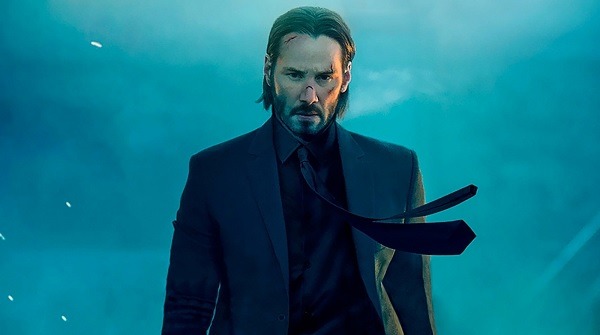
Not content with the world-building wonder of The Matrix, Keanu Reeves stepped aboard a hitman revenge film with a difference. The John Wick world of sacred rules and traditions within the underworld and assassins following strict codes made something otherwise routine feel a bit more elaborate. From the second film onward, the web of characters and world-building expanded and invariably spread across the globe with the organization’s wide reach.
Visually too, with every passing film, the hyperreal neon-drenched world got even more dazzling. Added to that, we had more backstory and bulletproof suits. Reeves’ larger-than-life, legendary hitman is also seemingly indestructible whilst still able to retain some fallibility, and there’s always a never-ending selection of colourful hitmen tasked with trying to take out Baba Yaga.
The Fast and the Furious
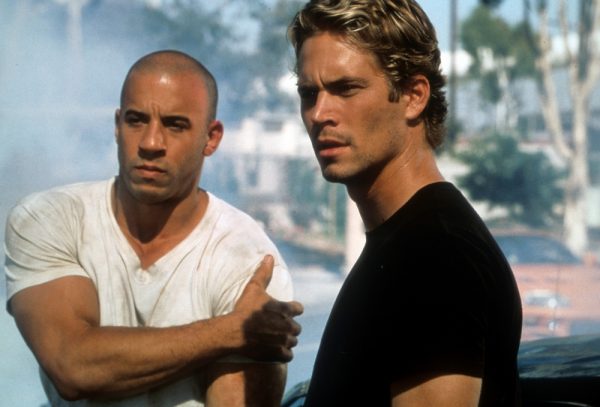
Like John Wick, the Fast franchise started pretty fairly low-key, before getting progressively wilder as the franchise wore on. From a Point Break ripoff tale of car thieves and the undercover pretty boy cop infiltrating them, through to world-ending threats and setpieces that became insanely outlandish. Somehow, the Fast movies got to space travel ahead of Tom Cruise, as well as tapping into the looming threat of AI before the Mission franchise did.
Vin Diesel has become the head of the franchise, particularly after the tragic death of Paul Walker. With his departure from the franchise, it lost a bit of humility, and almost every character who dies in the franchise seems to get some kind of resurrection. The highest points came with the initial introduction of Dwayne Johnson as a man-mountain agent tasked with hunting down Toretto’s (Diesel) band of world-saving car thieves. What the franchise has always lacked in grit and reality, it’s made up for with gleeful excess and a flagrant disregard for logic. The last two or three films were too daft in truth, but not without their goofy highlights.
Demolition Man
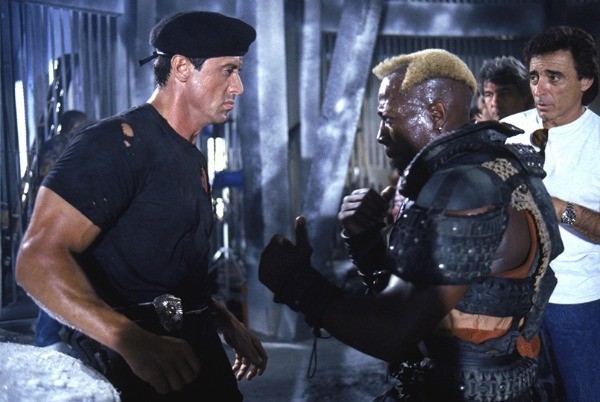
Demolition Man took its world-building across two periods of time. First introducing a blazing, crime-ridden alternative reality Los Angeles that looked like a dystopian hellscape before freezing its protagonist (Sly Stallone) and antagonist (Wesley Snipes) and thawing them out in a Utopian future of strictly enforced rules. The film has seen its cult legacy grow thanks to its portrayal of a “woke” paradise where offensive language and improper diets are banned.
Stallone plays a conservative’s wet dream of decisive, anti-authoritarian action, the only man who can bring down a ruthless criminal in a mollycoddled lefty world. It’s a wryly funny action film laced with satire. Snipes has a ball as the anarchic Simon Phoenix, and Sandra Bullock is a delight as an ambitious cop of the future, obsessed with late 20th-century pop culture, who longs for action in the dull San Angeles.
The Warriors
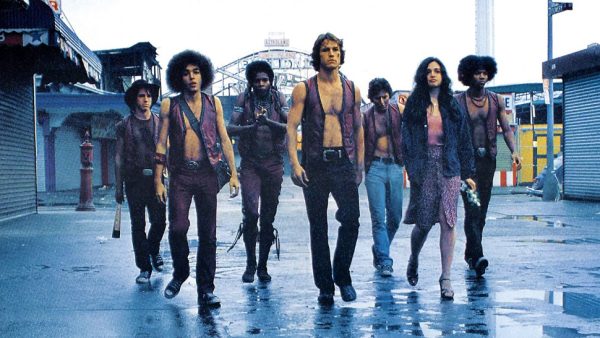
Walter Hill’s alternative vision of a gang-infested, curfewed New York sees the titular gang stuck across the City with a price on their heads and a hostile route back to their Coney Island turf. A little dash of punk and plenty of visceral action and immediacy, Hill’s breakout directorial effort takes place over the course of a night, never letting up.
The film’s distinctive vision of New York’s night and its inhabitants has proved influential for numerous films. It’s also a perfectly paced and lithe masterclass in efficiency at a shade under 90 minutes.
Desperado
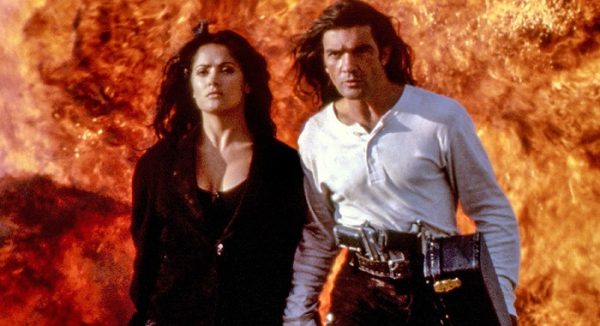
Robert Rodriguez’s stylish, sexy, and sweaty Mariachi action spectacular does something pretty clever with its world-building. Whilst Desperado is a semi-sequel reboot of his infamous micro-budget breakout, it opens with Steve Buscemi coming to a Mexican dive bar to tell a tale of a vengeful mariachi who is making his way to the town. As he recounts the fallout of Antonio Banderas’ last rampage in gloriously hyperbolic fashion (which Rodriguez shows us), it sets the tone for how larger than life the anti-hero is. He’s almost mythically unstoppable.
By the time Banderas appears in real and takes out his first band of villains, he’s not really any different to Buscemi’s excessive, gravity-defying vision of this bringer of death. The whole thing is ridiculous, but slick, musical and bolstered by the sweltering heat and chemistry between Banderas and Salma Hayek. The sequel, which followed, continued enriching the world and the mythical backstory of the heroic guitar player but not quite as brilliantly.
What’s your favourite world-building action movie? Let us know on our social channels @FlickeringMyth…
Tom Jolliffe


