

7 Good Movies That Were One Step Away From True Greatness
How many movies have you watched that you really enjoyed but still couldn’t shake the feeling that they could have been even better? There are several of them, and some come incredibly close to being truly great before suddenly taking a step backward. Sometimes it’s a disappointing act, an ending that doesn’t live up to the premise, a script that avoids its most interesting ideas, or just a lack of cohesion that keeps all the different pieces from coming together as well as they should. That doesn’t mean these movies are bad or not worth your time — in fact, some are still very recommended today. Even so, they leave you wondering, what if they had just gone a little further?
With that in mind, we’ve put together a list of 7 movies that fit that description. They’re all still worth watching (even if some people would disagree), if only for the experience. After all, few films make it so obvious how a handful of small changes can be the difference between a good movie and a genuine classic.
7) American Hustle

Oscar-nominated American Hustle revolves around an FBI sting operation targeting criminals and corrupt politicians, while two con artists get pulled into a scheme that spirals out of control. Performance-wise, it’s a very strong movie. The cast is phenomenal and operates on a level above the material, which keeps you invested from beginning to end. But great performances alone aren’t enough to make a movie great. The most fundamental elements are the direction and the screenplay, and it’s the latter that falls noticeably short.
The biggest problem with American Hustle is that it never really develops the kind of structure its genre needs. When you’re telling a story about crime and its consequences, the narrative has to feel solid. Instead, the movie draws far more attention to its vibe and eccentric characters, which is why the story never truly gets going. You keep waiting for a stronger payoff to the themes of manipulation and identity that it introduces, but the film’s energy ends up feeling too scattered. Overall, it’s built around an interesting concept, but it just isn’t well developed.
6) The Aviator

There was a time when everyone was talking about The Aviator, especially after its success at the Oscars. And it absolutely earned many of those wins, but Best Picture wasn’t one of them — and for good reason. The movie is a biopic that follows the life of Howard Hughes (Leonardo DiCaprio), focusing both on his rise as a business magnate and filmmaker and on the gradual deterioration caused by his OCD and obsession with control. On a technical level, it’s incredibly impressive, so much so that it’s still considered one of Martin Scorsese’s most ambitious projects. And DiCaprio’s performance? Flawless.
However, technical precision only goes so far if the movie doesn’t fully pull you in. The Aviator is an excellent, beautifully crafted film that tells the story of an important historical figure, but it never feels quite as emotionally profound as it should. That’s a significant flaw considering its central focus is Hughes’ personal battle with his phobias and mental illness. You understand everything that’s happening, but you never become emotionally invested. It’s a great movie, but it feels just one step below what it could have been.
5) Lucy
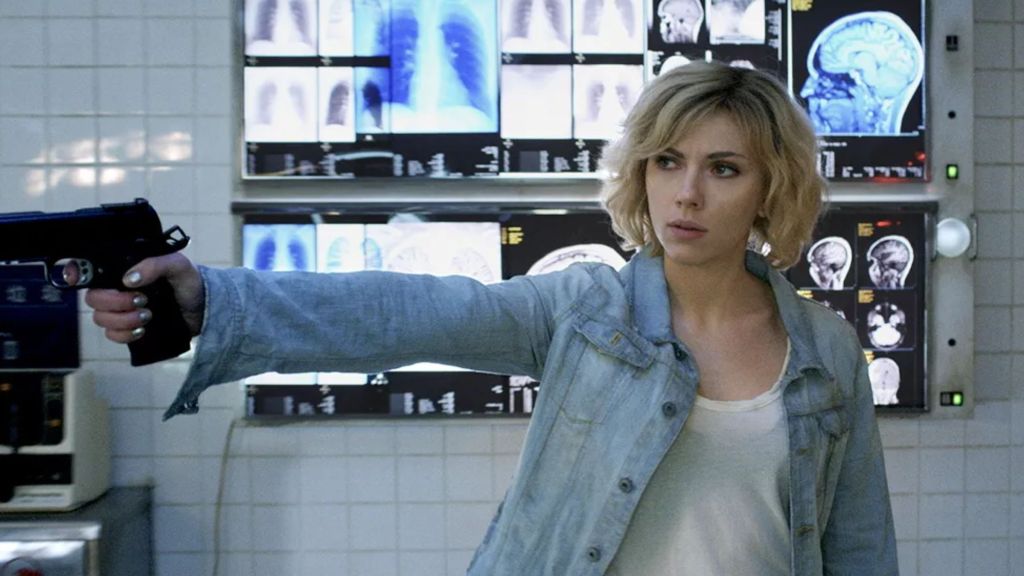
There was so much potential here, especially for an action sci-fi movie. Built around an intriguing premise, particularly for the early 2010s, Lucy follows a woman (Scarlett Johansson) who is forced to transport a powerful drug inside her body. When the substance leaks into her system, she begins unlocking increasingly extraordinary mental abilities. It’s hard to find a production with a concept that’s this ripe for exploration. And its first half does a great job of selling the idea, thanks to its fast pace and energetic action. After that, though, it starts to lose its way.
What happens is that, after a certain point, the screenplay seems to run out of ideas about where to take the story. Instead of exploring the implications of everything it has set up, it turns into a series of loosely connected explanations about human evolution and consciousness that feel more like random concepts than meaningful storytelling. They don’t fit naturally within the narrative or build toward anything satisfying. By the time Lucy ends, it feels like you’ve watched two different movies: an entertaining action thriller and a philosophical sci-fi film (or at least an attempt at one).
4) Elysium

Who even remembers Elysium? It’s almost the same situation as Lucy, except even more frustrating because it actually builds an interesting concept, but it just never commits to it. The biggest draw is its premise: the wealthy live on a flawless space station while everyone left on Earth struggles through social collapse, and the protagonist, Max Da Costa (Matt Damon), becomes part of a mission that could change that balance. It’s the kind of setup that practically sells itself, and when you combine it with the film’s striking visual style, it feels like all the ingredients are there for a masterpiece.
But in this case, it’s disappointing to see so much potential go to waste just because the movie doesn’t trust the complexity of its own idea. So Elysium ends up being a straightforward movie with a very conventional action structure. There was plenty of room to dive deeper into how this system actually works or how people actually respond to it, but instead, the screenplay keeps repeating its message in an almost literal way. The most frustrating part is that you spend the entire film expecting it to kick into a higher gear, and it never does.
3) Prometheus

Prometheus is the Alien movie that almost everyone brings up for the same reason: it’s considered the most divisive entry in the franchise. Some fans have tried to reevaluate it over the years, but overall, it’s still a difficult film to defend. The story follows a space expedition searching for the origins of humanity, only to discover an alien civilization and answers that raise even more questions. Visually, it’s absolutely stunning, and it’s clear from the beginning that Ridley Scott intentionally aimed for a more philosophical kind of sci-fi. That wouldn’t be a problem — if the execution lived up to the ambition.
Almost everything about the movie works on a technical level, but the inconsistencies in the story are just too significant to overlook because they undermine the very mystery the story is trying to build. Almost every character makes decisions that exist solely to push the plot toward the next set piece, which completely weakens both the sense of danger and, more importantly, the story’s internal logic. Prometheus is frustrating not because it’s a bad film, but because its narrative ambition is so much greater than its execution.
2) I Am Legend
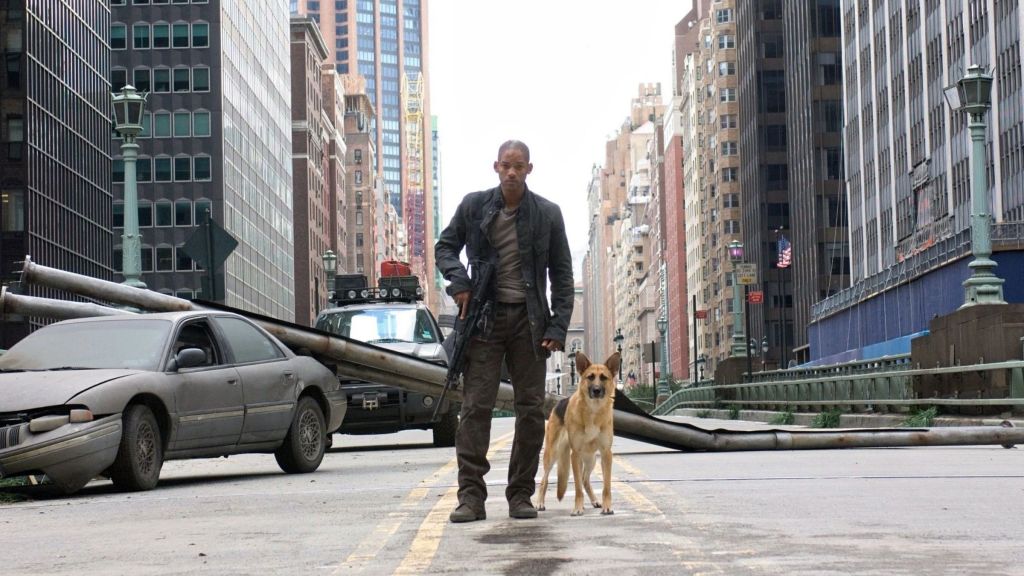
One of the most popular movies of the 2000s, I Am Legend isn’t a bad film — in fact, it’s far from it. However, when you compare it to the novel it’s based on, its flaws are much easier to spot. The story follows Dr. Robert Neville (Will Smith), a scientist who appears to be alone in New York after a devastating pandemic, trying to survive, searching for a cure, and coping with extreme isolation. And the first half of the movie is probably the best possible version of that premise: the empty city, the character’s daily routine, and Smith’s performance all come together exceptionally well.
However, the movie takes a completely different direction afterward. Once I Am Legend leans more into action, it loses the very thing that could have made it a truly great film. The tone shifts, and with it, even the genre starts to feel different. On top of that, the ending strips away the brilliant ambiguity of the original story, becoming the final piece that keeps the overall experience from being fully satisfying. Ultimately, it earns its place on this list because it gets so many things right, and that prevents it from being a bad production. Its biggest problem is just that it makes a few key wrong turns along the way.
1) Passengers
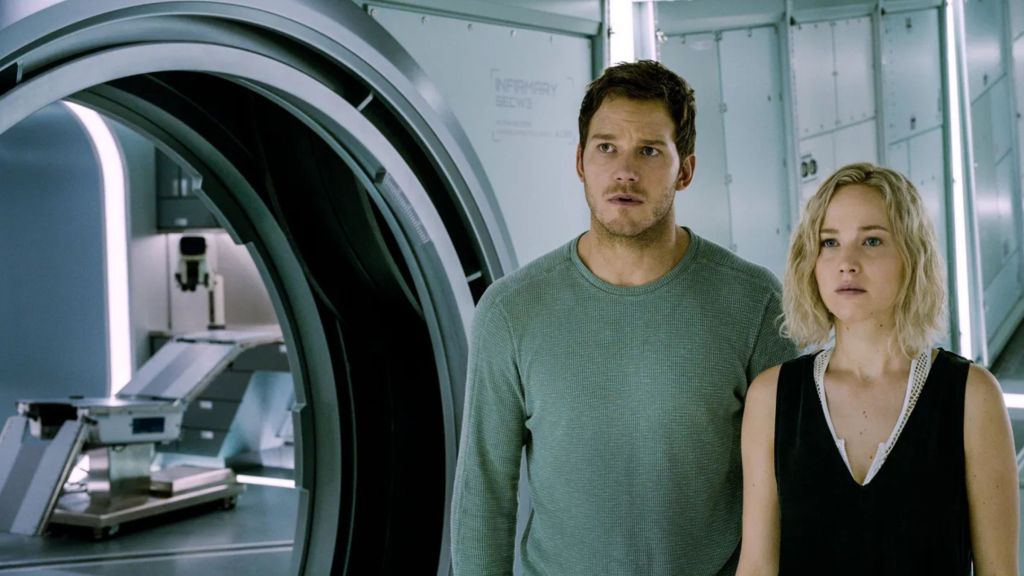
Have you ever watched a movie that you enjoyed but still felt like something was missing, even if you couldn’t quite put your finger on what it was? That’s Passengers. The story takes place aboard a spaceship traveling to a distant colony, where Jim (Chris Pratt) and Aurora (Jennifer Lawrence), two passengers, wake up from hibernation decades too early and find themselves stranded together for years. It had everything it needed to be a psychological thriller or even a masterclass in moral dilemmas. The opening certainly points in that direction, but as the story progresses, it shifts away from those ideas.
It’s an entertaining film, but its exploration of ethics never feels very deep. The natural direction would have been to deal with the consequences of the central situation, but perhaps in an effort to appeal to a broader audience, the screenplay steers Passengers toward becoming a fairly conventional romance. That doesn’t make it a bad movie, but at the same time, it’s exactly what keeps it from becoming a great one. It feels like the filmmakers chose the safest possible path at the exact moment the story needed to become more daring. So in the end, it never made much of a lasting impact.
What do you think? Leave a comment below and join the conversation now in the ComicBook Forum!

