
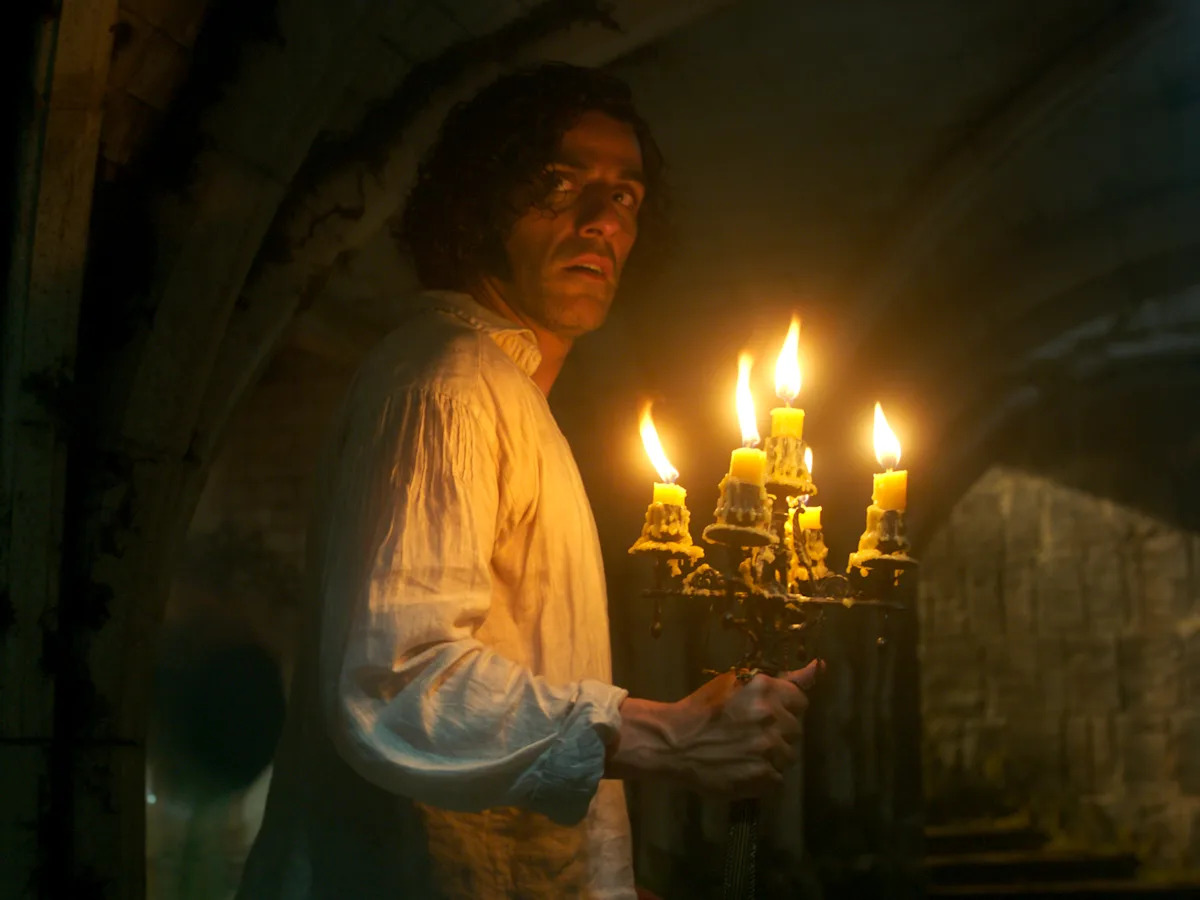
How Netflix’s new Frankenstein movie changes the ending for the better
For the Oscar-winning filmmaker Guillermo del Toro, adapting Mary Shelley’s ground-breaking Gothic novel Frankenstein has been his white whale. The Pan’s Labyrinth director has been discussing a potential spin on the story for decades and now, courtesy of Netflix, he has finally mounted his vision as a glorious, gargantuan epic with sensitivity and humanity running through every frame.
Oscar Isaac plays the lead role as the tragic scientist, while Jacob Elordi is his hodgepodge creation made of dead bodies and electricity. Del Toro’s film respects Shelley’s 200-year-old text greatly, but is also unafraid to make changes to reflect the director’s vision for the characters and the story. While literary purists may be affronted by del Toro’s twist on a classic, it makes his adaptation richer.
Note: The following contains spoilers for the 2025 Frankenstein movie.
Here are some of the biggest alterations from the Frankenstein book to the new version, now streaming on Netflix.
Frankenstein is much less sympathetic and friendless
Oscar Isaac plays Victor Frankenstein as friendless and almost entirely unsympathetic. (Netflix)
There has been a lot of debate over the years about who the true villain is in the Frankenstein story. However, this new version comes down very clearly on the side that Victor Frankenstein is the explicit and uncontested villain. This manifests in a character who is entirely alone in the world, lacking the familial safety net of the book’s Victor — he’s mostly estranged from his brother, who was his late father’s clear favourite child.
The film also omits the character of Henry Clerval, who is Victor’s best friend in the book and a key mediating influence, right up until he’s murdered by the Creature.
All of these changes serve to further isolate Victor as he becomes obsessed with the process of his creation. Isaac also plays Victor as a sneery, arrogant young scientist seeking to thumb his nose at the hoity-toity establishment, building the hubris that will eventually lead him down the dark path of his experiments. The audience is never on Victor’s side.
Elizabeth and William are totally different
Mia Goth plays a revamped Elizabeth in the Netflix version of Frankenstein. (Netflix)
As mentioned earlier, Frankenstein’s family unit undergoes significant changes in del Toro’s movie. In the book, William is Victor’s angelic younger brother, while Elizabeth is the adopted sister he eventually marries.
Both fall victim to the Creature in the original story, as the monster pursues revenge against Victor for rejecting him and later refusing to make him a companion. In the film, though, William (Felix Kammerer) is an adult and Lady Elizabeth (Mia Goth) is his fiancée. While Victor seems to have romantic feelings for Elizabeth, they are not reciprocated at all.
William and Elizabeth both still die in this version of the story, though the Creature is not directly responsible in either case. Both sustain mortal wounds as the Creature defends himself at the couple’s wedding, and it is actually Victor who fires the bullet that kills Elizabeth. These changes further enhance Victor’s isolation and make the Creature more sympathetic, though the unfortunate side effect is that Goth feels underused in the story.
The Creature is less murderous and has superpowers
Jacob Elordi plays the creature in the newest version of Frankenstein. (Netflix)
With the movie transforming Victor into a more overtly repulsive character, the corollary to that is a more sympathetic Creature. In del Toro’s version of the story, the Creature never commits a murder in cold blood, with his superhuman violence turned only toward those who try to harm him — as opposed to the murders of William, Elizabeth, and Henry Clerval in the book, as well as framing maid Justine for murder and getting her hanged.
Jacob Elordi’s take on the Creature is less physically repulsive than Shelley’s version, and his attitude toward humanity never curdles into vengeance in the same way. This also manifests in del Toro’s innovation, where the Creature has regenerative healing powers, much like a Gothic horror version of Wolverine. But like Wolverine, this amplifies the tragedy of the Creature — he may well be immortal, yet he’s doomed to spend that eternity in solitude.
This innovation also deepens the dark side of Victor’s character. He’s so repulsed by his creation that he fails to realise there may be applications for the Creature’s healing abilities in the world of medicine. He built a man as an exercise in vanity, rather than in search of genuine scientific advancement.
The Creature is born of war
The Crimean War plays a key role in Guillermo del Toro’s spin on Frankenstein. (Netflix)
While Shelley’s novel was set at approximately the time it was written, in the early 19th century, del Toro shifts it forward a few decades to take place amid the Crimean War, which occurred during the 1850s. Rather than taking body parts from charnel houses as he does in the book, the movie’s Frankenstein harvests most of the raw materials for his Creature from soldiers recently killed on the battlefield.
Read more: Jacob Elordi ‘was in such pain’ while filming Frankenstein (BANG Showbiz, 2 min read)
Victor also receives funding and a laboratory from a new character created for the movie — arms dealer Henrich Harlander, played by Christoph Waltz. So, in every way, the Creature is born from the spoils of war. This has the effect of amplifying the sense that the Creature was always doomed, crafted in a crucible of violence. So it’s all the more remarkable that this brutal upbringing begets a Creature of such sensitivity and humanity.
This is a core ethos throughout del Toro’s career, given his frequent affection for finding stories of human beauty amidst conflict — including in his remarkable Spanish films, The Devil’s Backbone and Pan’s Labyrinth.
Frankenstein’s father is a stronger presence
Charles Dance plays Frankenstein’s father in the new version of the story. (Netflix)
On the page, Alphonse Frankenstein is a doting father who holds a very passive role. He ultimately dies of grief when the Creature murders Elizabeth on the night of her wedding to Victor. In the movie, Charles Dance plays the renamed Leopold Frankenstein as a brutal doctor who beats his children when they are unable to remember facts about the human body. He has a clear preference for William over Victor and dies early on in the movie.
This change has the effect of curdling Victor’s attitude to science — he sees it as a game to be won rather than a joyous pursuit of learning — and also placing an enormous chip on his shoulder. Victor sees his scientific advancements as a way to counter the abusive brutality of his father, who believed only in the way things were rather than what they could be.
There’s more catharsis to the ending
Oscar Isaac and Jacob Elordi as creator and creature in Frankenstein. (Netflix)
At the end of the book, Frankenstein dies after telling his story to Arctic explorer Walton. It’s only after the death of his creator that the Creature comes aboard and promises Walton he intends to construct a funeral pyre and take his own life. In the movie, the Creature enters the boat at the midpoint of the story to narrate his perspective on the events. Victor apologises to the Creature before he dies, causing the Creature to free the boat from the Arctic ice and embrace his life.
Read more: Guillermo Del Toro Would “Rather Die” Than Use Generative AI (Deadline, 1 min read)
Again, this change reflects del Toro’s humanist vision of the world. The novel’s ending is entirely absent of hope, but the film grants both Victor and the Creature a final emotional catharsis. It also allows the Creature a modicum of happiness and a hopeful future, despite the curse of his immortality and enforced solitude. That sort of hope amid dire circumstances is very much the del Toro way.
Frankenstein arrives on Netflix in the UK from 7 November.


