
As a Fan of the Alien Franchise, Here’s How I’d Rank All the Movies
The first season of Alien: Earth just concluded, and it proved to be one of the most enjoyable shows of the year thus far, arguably exceeding expectations. More Alien films are reportedly in the works, too, meaning that now’s as good a time as any to reflect back on the franchise’s highs and lows.
Across decades, different directors have put their stamp on the saga, producing a filmography that’s wildly uneven but consistently fascinating. Even the weakest entries have strange charms, and the best rank among the greatest films ever made.
9
‘Aliens vs. Predator: Requiem’ (2007)

“Eddie, people are dying. We need guns.” The nadir of the Alien series is unquestionably Requiem. The promise of a Predator and a Xenomorph locked in all-out war should have been thrilling, but the execution is a muddy, joyless mess. Set in a small Colorado town, the flick tries to ground the conflict in suburbia, but the result is incoherent action and poorly lit battles where it’s nearly impossible to tell what’s happening. Its predecessor was goofy yet enjoyable. This one’s just boring.
The “Predalien” hybrid creature had potential as a terrifying new foe, but it’s wasted in a film more interested in shallow carnage than tension or atmosphere. Characters are forgettable, and the tone is relentlessly bleak without offering any substance. In other words, Requiem squanders one of the coolest crossover ideas in sci-fi horror history. This is M. Night Shyamalan‘s Avatar-levels of wasted potential. A disposable sequel that’s neither thoughtful nor fun.
8
‘Alien vs. Predator’ (2004)

“During a big game hunt, the animals being hunted don’t arm the hunters!” The first AVP isn’t a great film, but compared to its sequel, it’s at least watchable and, at times, very funny in a silly way. The movie leans heavily into pulp sensibilities: ancient pyramids under Antarctica, human explorers caught in the crossfire between Predators and Xenomorphs, and a central heroine (Sanaa Lathan‘s Lex) who forms a tentative alliance with a Predator. It’s absurd, but there’s a kind of B-movie fun in watching two iconic monsters battle in lavishly designed sets.
This is the kind of movie that might frustrate most adults but is bound to please kids who are into extraterrestrial monster mashes. The PG-13 rating robs the violence of its bite, and the human characters are underwritten, but director Paul W.S. Anderson at least respects the spectacle of the premise. For fans, it’s guilty-pleasure territory; far from the artistry of the original films, but enjoyable if you treat it essentially as fan fiction.
7
‘Alien: Resurrection’ (1997)

“I should have known. No human being is that humane.” Jean-Pierre Jeunet‘s Alien: Resurrection is one of the strangest entries in the franchise. Set 200 years after Alien 3, it resurrects Ripley (Sigourney Weaver) as a human-Xenomorph hybrid clone, one of the several species-splicing experiments. The most grisly is the so-called ‘newborn’, a humanoid hybrid that foreshadowed the monster from Romulus. It’s creative creature design, but was also polarizing, with many fans disliking it.
Overall, this movie embraces grotesque body horror and dark comedy, traits typical of Jeunet’s style, but the tonal whiplash is jarring. While the supporting cast, including Winona Ryder as an android and Ron Perlman as a mercenary, add some color, the story feels like fan fiction stretched into blockbuster form. All in all, Resurrection is a fascinating failure, a bizarre, messy experiment that proves even bad Alien movies are still worth watching once.
6
‘Alien 3’ (1992)

“In an insane world, a sane man must appear insane.” David Fincher‘s directorial debut is infamous for its troubled production, with studio interference and rewrites plaguing the process. Yet despite its flaws, Alien 3 has a distinct mood that makes it more interesting than its reputation suggests. Killing off beloved characters from Aliens in the opening moments was a gut punch to fans, but it also set the stage for a bleak meditation on grief, faith, and sacrifice.
Ripley, stranded on a prison planet with no weapons, faces the Xenomorph stripped of the support systems she once relied on. Weaver gives one of her strongest performances here, believably capturing Ripley’s exhaustion and resolve. The film as a whole is uneven, and some effects haven’t aged well, but its nihilistic tone lingers. In sum: a frustrating film that compensates a little with immersive atmosphere and interesting themes.
5
‘Alien: Covenant’ (2017)

“Look on my works, ye Mighty, and despair.” Ridley Scott‘s second prequel tries to balance horror with the big philosophical ambitions of Prometheus. The result is uneven but compelling. On one hand, Covenant brings back the stripped-down terror of the original, with Xenomorphs stalking colonists in claustrophobic environments. On the other, it doubles down on Michael Fassbender‘s android David, turning him into the central figure of the saga; a Gothic, Frankenstein-like creator whose obsession with perfection leads him to engineer the Xenomorphs themselves.
Some fans resented the shift away from Ripley-style human heroism toward android melodrama, but others admired Scott’s audacity, and Fassbender’s dual performance is faultless. In addition, the horror sequences, particularly the shower attack, recapture some of the franchise’s brutality, even if the pacing falters. That said, the ending, though memorable, confuses the timeline and arguably raises more questions than it answers.
4
‘Prometheus’ (2012)

“They created us. Then they tried to kill us.” When Ridley Scott returned to the franchise with Prometheus, expectations were astronomical. Instead of delivering a straight prequel, he gave audiences a sprawling meditation on creation, belief, and hubris. It’s the most cerebral movie in the franchise, trying to answer big questions about life and evolution. Specifically, it explores the Engineers, the mysterious beings who seeded life on Earth, and follows a crew searching for answers about humanity’s origins.
While it doesn’t feature traditional Xenomorphs until its final moment, Prometheus‘ body horror is just as disturbing: the infamous med-pod surgery scene is one of the most harrowing sequences in the whole franchise. Critics and fans were divided on its script and character logic, but visually and thematically, this film is impressive. Nevertheless, some of the ‘big-brain’ ambitions seem misplaced. For instance, revealing that humanity was created by the Engineers simply pushes back the real questions. For instance, where did the Engineers come from and why?
3
‘Alien: Romulus’ (2024)

“We simply cannot wait for evolution anymore.” The newest addition to the franchise, Alien: Romulus feels like a return to basics, and that’s precisely why it works. Director Fede Álvarez embraces the stripped-down terror of Alien while injecting just enough of the high-stakes action of Aliens. There are no grand themes or any striving for big ideas. Instead, we get a lean, mean plot about a group of young characters who encounter the perfect organism in all its horror. The practical effects are solid, the set pieces are suspenseful, and the movie makes us care about the protagonists before throwing them into hell.
Romulus doesn’t reinvent the franchise, but it revitalizes it by remembering what made it work in the first place: claustrophobic terror, shocking gore, and the constant dread of the unknown. In this sense, the Alien movies are kind of like the James Bond franchise, where part of the fun is in seeing how new storytellers can innovate within a very rigid story structure.
2
‘Aliens’ (1986)

“We’re on an express elevator to hell, going down!” James Cameron‘s Aliens is one of the greatest sequels ever made because it doesn’t try to replicate the original exactly. Where Alien was slow-burn horror, a haunted house movie in space, Aliens is a relentless war movie. Cameron fuses sci-fi and action, serving up unforgettable thrills while also expanding the mythology. The first movie had a single alien but unarmed protagonists. Aliens hands its heroes guns, but pits them against legions of xenomorphs.
Along the way, Sigourney Weaver’s Ripley transforms from survivor to warrior, earning her an Oscar nomination and cementing her as one of cinema’s greatest heroes. The Colonial Marines, boisterous, funny, are doomed, were instantly iconic too, while the introduction of Newt provides emotional stakes. Finally, the action sequences, from the hive assault to Ripley’s showdown with the Queen in the power loader, remain legendary. What a classic.
1
‘Alien’ (1979)

“It’s got a great defense mechanism. You don’t dare kill it.” The first Alien just narrowly beats out Aliens for the top spot on this list. It’s not just the high point of the series but one of the best sci-fi movies of all time. A masterpiece of claustrophobic horror, it brought the genre to new heights, combining H.R. Giger‘s biomechanical nightmares with Scott’s meticulous pacing. The Nostromo feels like a lived-in, working-class environment, and the crew, unlike typical sci-fi heroes, are blue-collar workers caught in something far beyond their control.
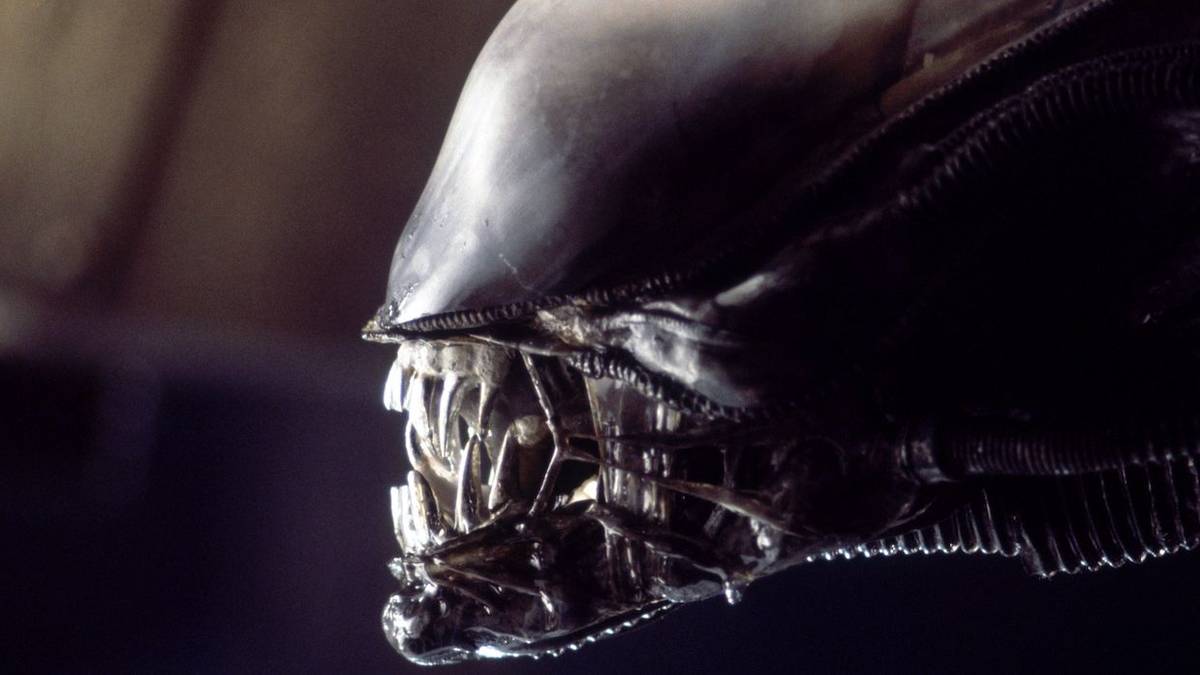
The Xenomorph itself remains cinema’s most terrifying creature, its life cycle a grotesque metaphor for violation and body horror. The monster design is simply genius and is still unmatched all these decades later. Every detail (the sound design, the production design, the chestburster scene) has become iconic. And then there’s Ripley, who emerged as an unlikely but perfect heroine: resourceful, resilient, and unforgettable.


